Categoriesearly mobility

RoWalker for Early Patient Mobility: A Safer Path to Ambulation

Picture a busy intensive care unit. A patient recovering from cardiac surgery is finally cleared to take a first walk. This is a milestone moment, the kind that sets recovery in motion. Yet the team pauses. The patient is tethered to oxygen, connected to intravenous lines, and managing surgical drains. Steadying that patient safely will take two or even three staff members. So the walk gets pushed to later, and later becomes tomorrow, and another quiet day of bed rest begins.

Every delayed first step raises the risk of deconditioning. The right ambulation device changes that equation entirely, turning a high effort, multiple staff task into a safe, confident walk that protects patients and caregivers alike.

Immobility harms patients within days, not weeks. Early mobilization has earned its place as a cornerstone of modern recovery, yet countless programs stall because staff lack a safe, practical way to walk complex patients. Here is what this article will cover:

  • Why early mobilization matters and what immobility truly costs patients
  • How the SPH Medical RoWalker supports safe post surgical ambulation
  • The features that build patient confidence and prevent falls
  • How the RoWalker reduces staff injury and eases staffing demands
  • Where the RoWalker delivers value across your facility

Grounded in evidence based Safe Patient Handling and Mobility (SPHM) practice and aligned with ANA and AORN standards, this discussion starts with a simple truth. The clock begins ticking the moment a patient stays in bed.

Why Early Patient Mobility Matters

What does the clinical evidence say about getting patients moving? It says the earlier, the better.

Early mobilization is one of the most effective, lowest cost interventions available for improving recovery. Moving patients soon after surgery or intensive care admission supports pulmonary function, sustains circulation, and preserves muscle that would otherwise waste away. These are not incidental gains. They are the foundation of a faster, smoother recovery.

The outcomes speak for themselves. Early ambulation is linked to shorter lengths of stay, fewer complications, and quicker functional recovery. Patients return home sooner and stronger, and facilities free up beds and resources. Yet a mobility plan succeeds only when staff have safe, reliable equipment to act on it. Intention without a practical tool leads to missed opportunities, day after day.

Consider a cardiothoracic unit that adopts a firm “walk by day one” protocol. With the right ambulation device in place, patients move sooner, recover faster, and leave the hospital earlier, with fewer readmissions tied to weakness and preventable complications.

Documented benefits of early mobilization include:

  • Reduced length of stay and lower overall hospital costs
  • Improved respiratory and circulatory function
  • Preserved muscle strength and functional independence
  • Higher patient satisfaction and HCAHPS scores

Early mobility is not optional care. It is evidence based practice that shapes both clinical outcomes and the bottom line. The urgency grows clearer when we examine exactly what happens to patients who stay in bed too long.

The Hidden Costs of Immobility

What goes wrong when patients remain immobile? A cascade of complications that can quietly undo surgical success.

Immobility is not a neutral pause in care. It actively drives harm, and the damage begins faster than many teams expect. Understanding these risks is the first step toward preventing them.

  • Deconditioning and muscle loss. Patients can lose meaningful muscle strength within days of bed rest, which makes each delayed walk harder than the one before.
  • ICU acquired weakness. Prolonged immobility contributes to profound weakness that lengthens both intensive care and total hospital stays.
  • Pressure injuries. Sustained pressure on immobile tissue threatens skin integrity, a central concern for every wound care team and WOCN certified nurse.
  • Deep vein thrombosis. Reduced circulation raises the risk of dangerous blood clots that can turn a routine recovery into an emergency.

Picture an abdominal surgery patient whose recovery stalls after several days of limited movement. The patient grows weaker, faces a higher clot risk, and now confronts a longer, costlier stay than anyone anticipated. What began as a straightforward recovery becomes a complicated one, largely because the patient could not move safely.

What immobility puts at risk:

  • Muscle strength and functional mobility
  • Skin integrity and pressure injury prevention
  • Circulatory health and clot prevention
  • Respiratory function
  • Overall length of stay and total cost of care

Every day a patient stays in bed carries measurable clinical risk. That reality makes a safe, practical path to ambulation an urgent priority. The challenge, of course, is walking complex patients safely. This is precisely what the RoWalker was engineered to solve.

How the SPH Medical RoWalker Works

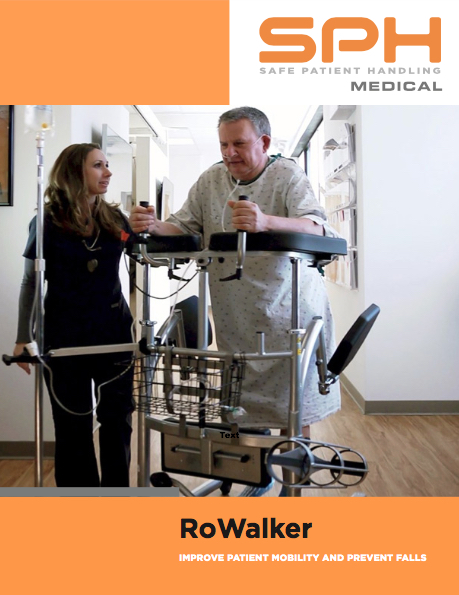
What is the RoWalker, and how does it make early ambulation possible? It is an ergonomically designed walking aid built specifically for early mobilization, allowing even complex post surgical patients to walk safely and with confidence.

The RoWalker was not designed in isolation. It grew out of years of feedback from cardiothoracic surgeons, nurses, physical therapists, and respiratory therapists, so it reflects real bedside needs rather than theoretical ones.

Originally created for post cardiac and abdominal surgery patients, it has since become a gold standard early mobility device used well beyond its initial scope.

Its defining strength is consolidation. The RoWalker carries all the equipment a complex patient needs, including oxygen, intravenous lines, and drainage, so a single walk requires no improvised juggling of poles, tanks, and tubing.

Everything travels with the patient, secured and organized.

How a Walk Begins

Getting a patient moving with the RoWalker follows a clear, repeatable sequence:

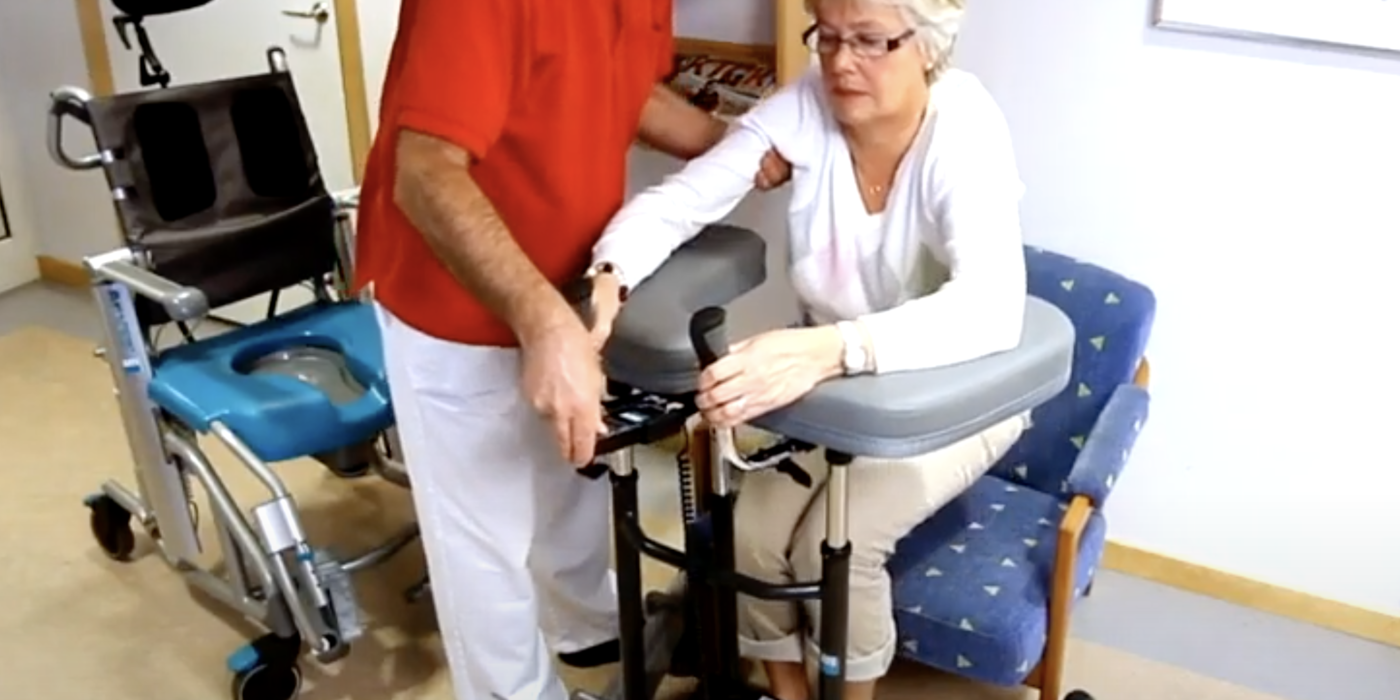
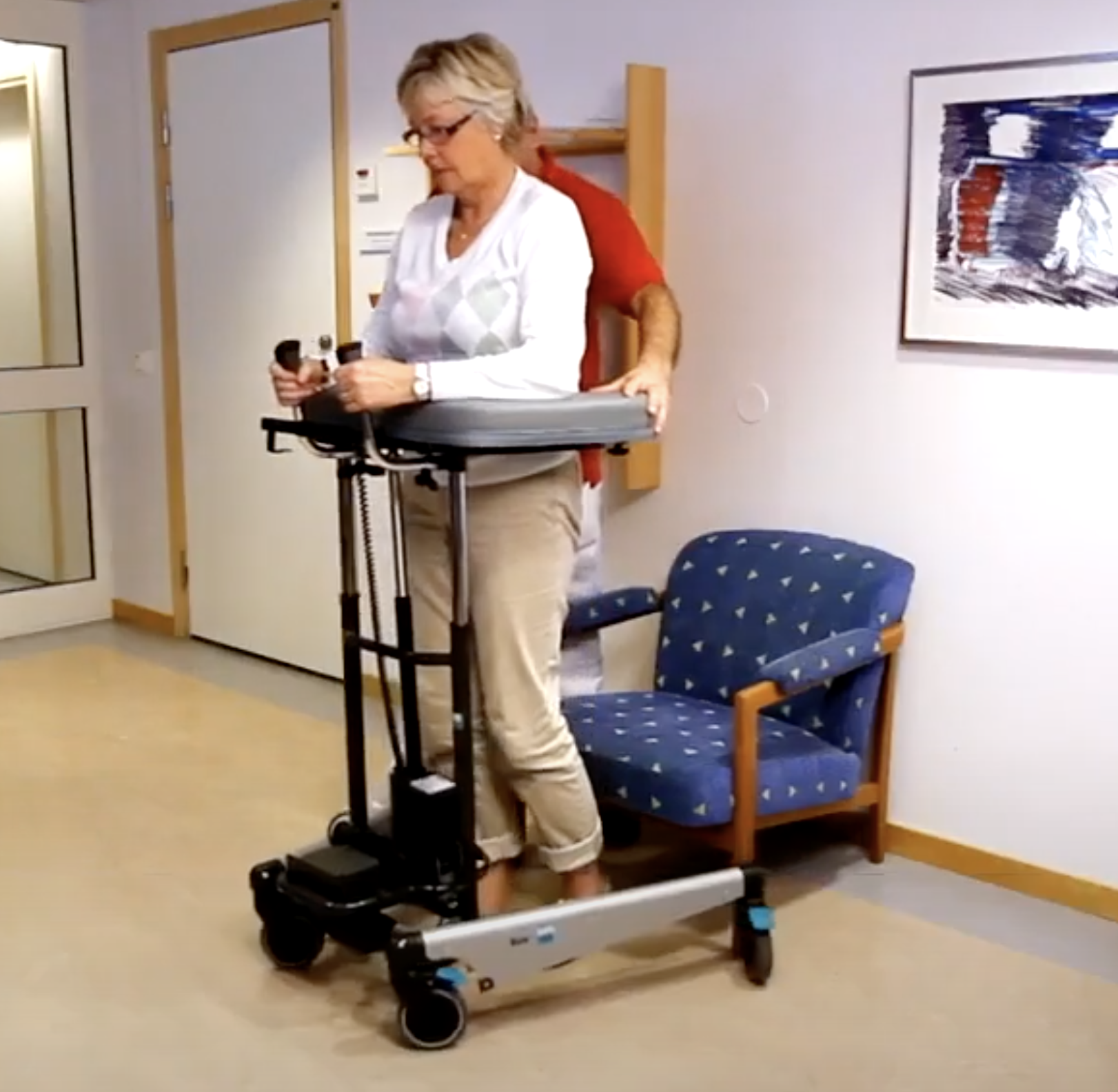
  • Staff position the RoWalker at the bedside with brakes on and adjust the table height of the RoWalker to the patient’s estimated height.
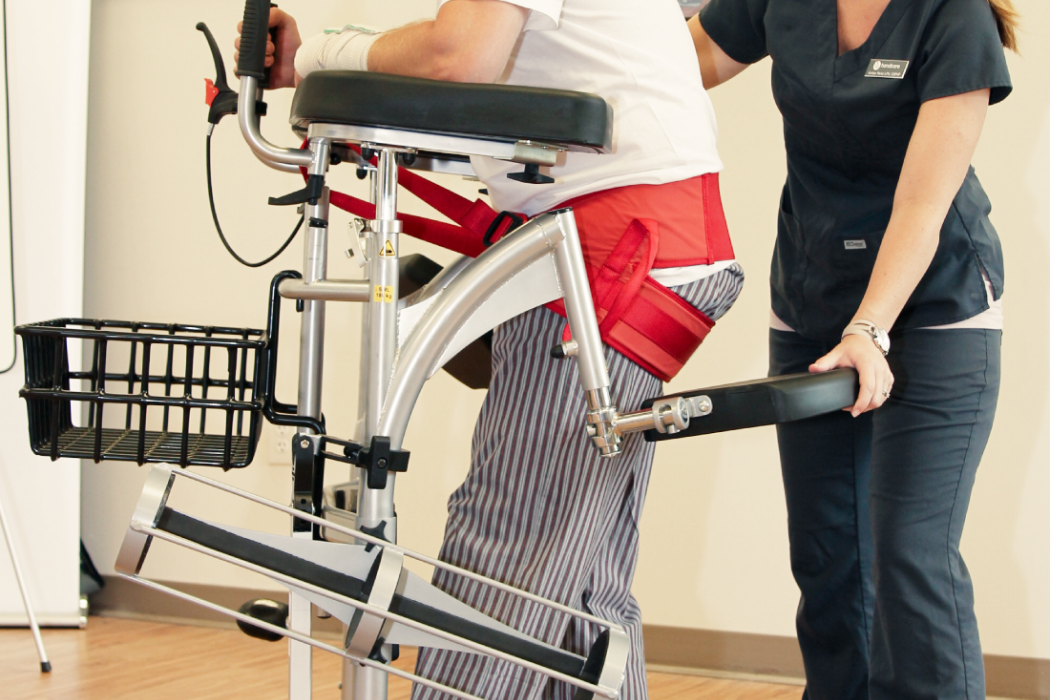
  • Staff can use an ambulation belt or a standard gait belt if needed to assist the patient from sitting to standing, or they can stand up right into the RoWalker.
  • The seat flaps can be lowered behind the patient or kept in a vertical position depending upon the patient’s step length.
  • The patient rests their forearms on the table pads and holds the hand grips.
  • RoWalker brakes are unlocked and the patient takes first steps.
  • The device doubles as a mobile standing frame, useful at the bedside or anywhere in the facility.
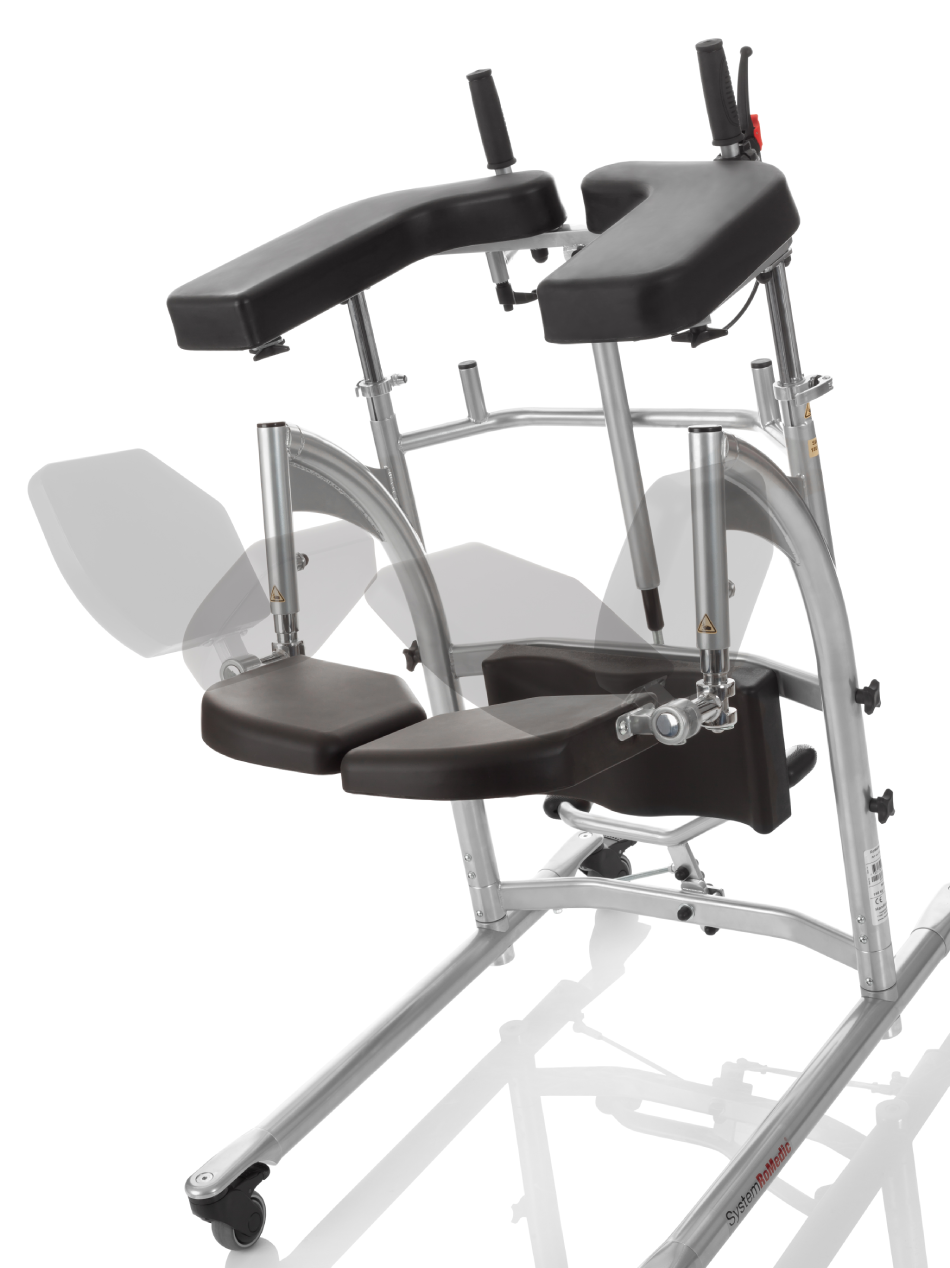
The directional casters can be engaged for longer walks to help the RoWalker steer more easily.

The seat flaps can be lowered at any time to give the patient a rest, and then challenge them to take more steps.

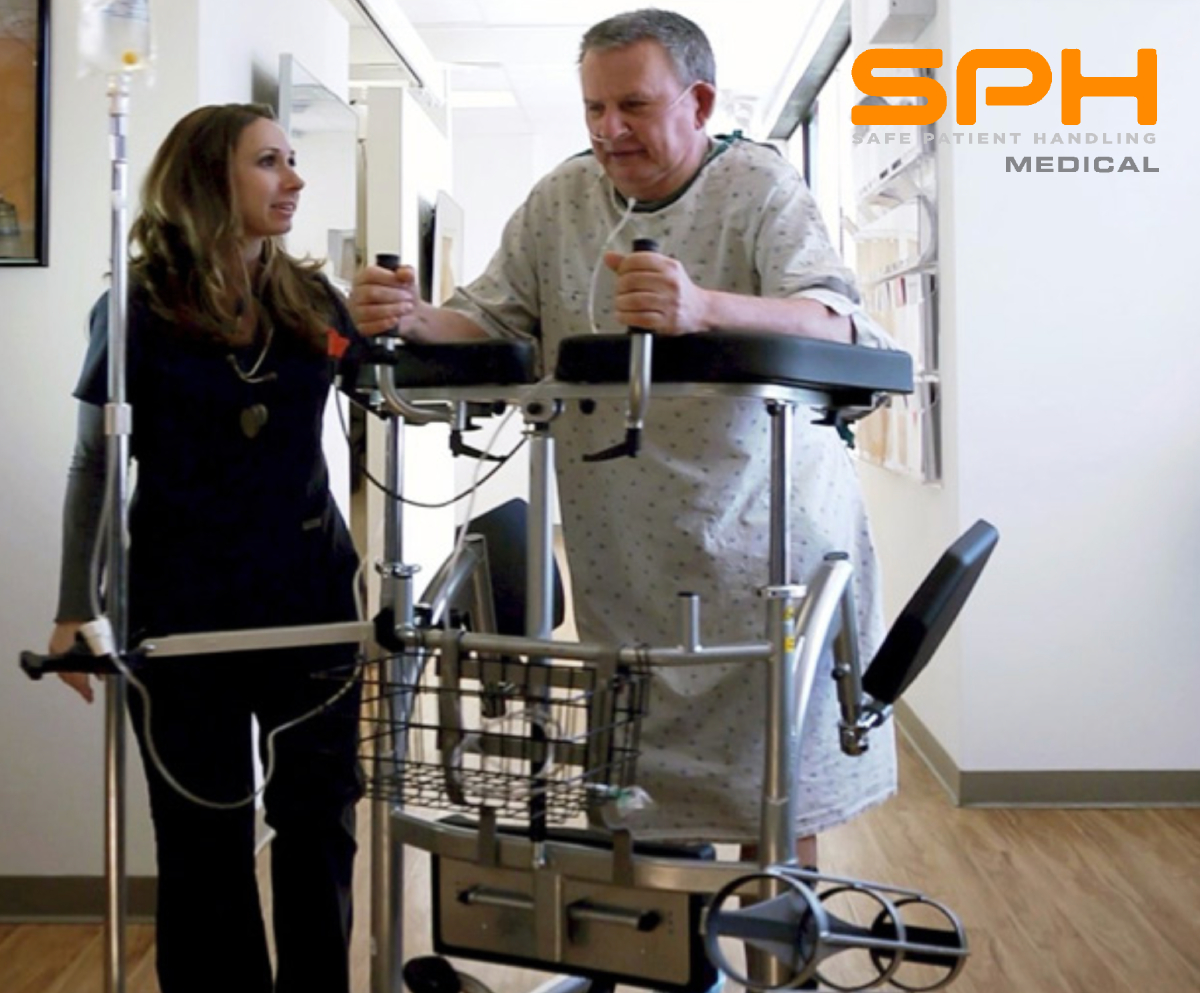
Consider an intensive care nurse walking an oxygen dependent patient down the hallway. The oxygen tank, intravenous pole, and surgical drains all travel secured to the RoWalker, while directional rear locks keep the walk tracking straight and steady. What once demanded a small team now proceeds smoothly and safely.

The RoWalker consolidates support, equipment, and stability into one device, transforming a daunting task into a manageable, repeatable step in recovery. Its thoughtful engineering shows most clearly in the specific features that protect patients during every walk.

Key Features That Build Patient Safety and Confidence

Which design elements make the RoWalker both safe and effective? Every feature serves one goal: helping patients move safely while feeling secure enough to take the next step.

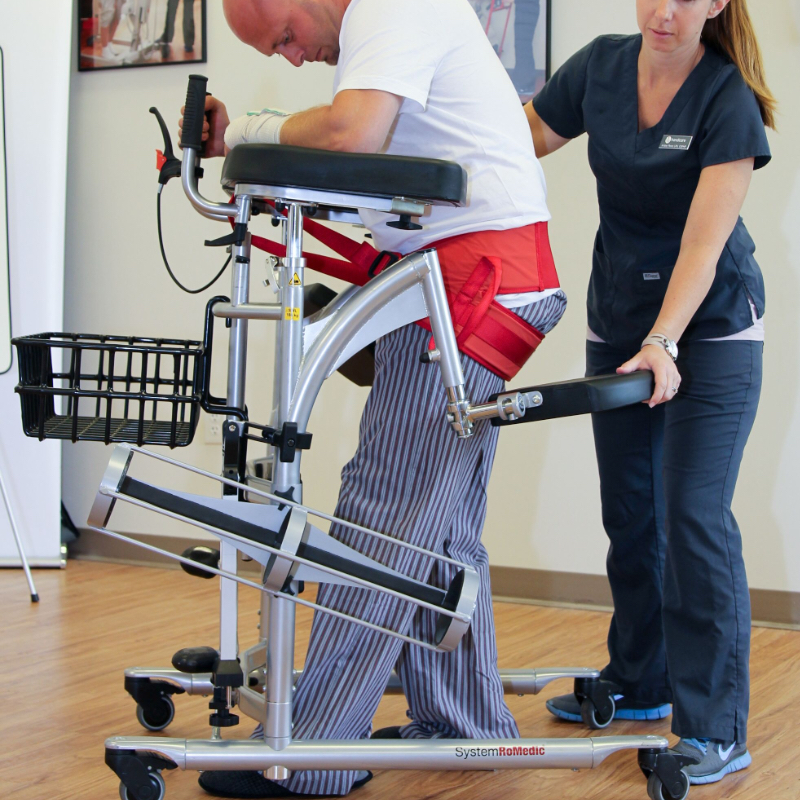
  • Built in split seat pads. These provide a comfortable resting spot mid walk and act as reliable fall prevention, giving patients the confidence to attempt more steps. The pads swing away and fold up to ease transfers in and out of the device.
  • Adjustable armrests and height. Stepless height adjustment, along with individually adjustable armrest and hand grip positioning, ensures a precise fit for patients from short to very tall.
  • Soft kneepad. These offer support during standing and protection during walking.
  • Width adjustable base. This allows the walker to be positioned close to chairs and wheelchairs for easy, safe access.
  • Directional wheel locks and front brakes. Rear directional castors keep the RoWalker tracking straight down the hall, while front brakes lock securely for sit to stand movements and rest periods.
  • Integrated equipment support. Oxygen tank holders, a telescoping intravenous pole, drainage bag hooks, and a customized basket for cardiac monitors keep everything secured and within reach.

The contrast with a conventional attempt is striking

A standard ambulation attempt versus the RoWalker:

  • Standard attempt: multiple staff bracing the patient, loose lines and poles, few rest options, pulling a wheelchair behind the patient, and a higher fall risk
  • RoWalker: secured equipment, integrated support, built in seating for rest, controlled directional walking, and a reduced fall risk

Picture a patient with weak legs who tires halfway down the corridor. Rather than risking an unsteady return trip, the patient simply rests on the seat pads before continuing. What could have been a fall becomes a successful walk.

The RoWalker’s features work together to help patients feel confident and secure, which is the emotional foundation that drives active participation in recovery. These same features carry an equally important benefit for the caregivers guiding each walk.

Reducing Staff Injury and Staffing Demands

How does the RoWalker protect caregivers and ease staffing pressure? By providing stable, engineered support, it eliminates the need for two caregivers and removes the manual strain that makes ambulation one of nursing’s riskiest tasks.

Supporting an unsteady patient by hand forces staff into awkward, high load postures. Biomechanical research, including OHSU Biodynamics laboratory testing, consistently confirms that manual patient handling generates spinal loads far exceeding those required when assistive devices carry the task. In other words, the traditional approach places caregivers directly in harm’s way.

The RoWalker changes that. Its ergonomic design allows a single staff member to safely mobilize a patient the device physically supports. Freeing a second caregiver eases pressure in short staffed units, which means mobility plans actually happen rather than being deferred to a quieter moment that never comes.

Consider a Med Surg unit that once required two nurses for every walk. With the RoWalker, one staff member completes early mobility rounds safely, reclaiming hours of caregiver time across each shift.

How the RoWalker supports SPHM goals

  • Eliminates manual patient support during ambulation
  • Reduces caregiver back and shoulder strain
  • Lowers the staff to patient ratio needed for safe walks
  • Aligns with ANA and APTA Safe Patient Handling and Mobility standards

The RoWalker protects the workforce while making mobility programs genuinely feasible, a rare win for both safety and staffing. These advantages explain why the device has spread far beyond its original surgical roots.

Where the RoWalker Delivers Value Across the Hospital

Which units benefit from the RoWalker? Though designed for cardiothoracic and abdominal surgery patients, it has become a versatile early mobility solution used throughout leading hospitals.

  • Intensive care. It safely mobilizes complex, equipment dependent patients to combat ICU acquired weakness.
  • Med Surg. It supports routine post surgical ambulation with fewer staff members.
  • Orthopedics. It provides stable, confidence building support for patients relearning to walk.
  • Rehabilitation. It serves as a walking and standing training aid and doubles as a mobile standing frame.

Settings where the RoWalker excels:

  • Post cardiothoracic and abdominal surgery recovery
  • Critical care early mobility protocols
  • Orthopedic and surgical step down units
  • Physical therapy and rehabilitation programs

Its small footprint fits any patient room, and its adaptability makes it a single, standardized solution across diverse care areas. That versatility points directly to the return a facility can expect from its investment.

The Clinical and Financial ROI of Early Mobility

Does investing in the RoWalker pay off? It delivers returns on two fronts at once: better patient outcomes and lower avoidable costs.

Faster mobilization is tied to reduced length of stay, and shorter stays bring significant cost savings. Preventing deconditioning, pressure injuries, and clots reduces expensive downstream care. Fewer staff injuries mean fewer workers compensation claims and fewer lost workdays. Patients who recover mobility sooner report better experiences, which supports your HCAHPS scores and process improvement goals.

Where the ROI shows up:

  • Reduced length of stay and lower hospital costs
  • Fewer immobility related complications
  • Lower workers compensation and injury claims
  • Improved patient satisfaction and outcomes

Picture an administrator weighing the one time cost of RoWalker units against a single year of extended stays and staff injury claims tied to unsafe or delayed ambulation. When the numbers sit side by side, the RoWalker stops looking like an equipment expense. It becomes a high return investment in outcomes, safety, and efficiency.

Immobility drives deconditioning, weakness, pressure injuries, and dangerous clots. Early mobilization reverses that trajectory, shortening stays and speeding recovery. The SPH Medical RoWalker 400 makes early ambulation safe and practical, protecting patients from falls, protecting staff from injury, and easing staffing demands across your facility.

The right device truly does turn a delayed, high effort walk into a safe, confident first step.

Start by assessing your current early mobility practices. Identify the units where delayed ambulation is quietly stalling recovery, and gather honest input from your nursing and therapy teams about the barriers they face. Then bring the RoWalker to your SPHM or value analysis committee for evaluation, where the evidence can guide an informed decision.

The RoWalker is the gold standard of early patient mobility devices and an evidence based step toward safer patients, healthier staff, and stronger outcomes. To see how it can transform your early mobility program, contact SPH Medical to request a quote to improve patient mobilization at your facility.

Physical Therapists are supportive of Safe Patient Handling to promote functional improvement without risk of injury
Categoriesearly mobility,  Patient Handling,  Slings and Lifts

Championing Safe Patient Handling Practices and Early Patient Mobility

The American Physical Therapy Association: Championing Safe Patient Handling Practices and Early Patient Mobility

The American Physical Therapy Association (APTA), founded in 1921, has been instrumental in transforming lives and strengthening the physical therapy profession for over a century. With a mission rooted in improving the health and quality of life of individuals and communities, the APTA has consistently championed safe patient handling and early patient mobility practices across healthcare settings in the United States.

The Importance of Safe Patient Handling

Safe patient handling is crucial for both healthcare providers and patients. For providers, improper patient handling can lead to serious injuries, including musculoskeletal disorders. According to the Bureau of Labor Statistics, healthcare workers suffer from back injuries more than any other occupation.

Patients are also at risk. Improper handling can result in falls, discomfort, and incorrect positioning, leading to potential complications and longer recovery times.

The APTA’s Role in Promoting Safe Practices

Recognizing these challenges, the APTA has devoted significant effort towards promoting safe patient handling. Their strategies encompass education, advocacy, and the promotion of innovative tools and techniques.

The APTA provides robust educational resources to healthcare professionals, including guidelines, webinars, and workshops. These resources focus on proper patient handling techniques, injury prevention, and the use of assistive equipment.

In terms of advocacy, the APTA works tirelessly to promote policies and regulations that prioritize safe patient handling. They collaborate with healthcare organizations, policymakers, and other stakeholders to influence change at both the systemic and practice levels.

As part of their commitment to innovation, the APTA promotes the use of modern equipment and interventions that facilitate safe patient handling. These include lift aids, transfer devices, and other ergonomic solutions that reduce the physical strain on healthcare workers and enhance patient safety.

Reinforcing the Mission of the APTA

The APTA’s mission to improve patient safety through safe patient handling practices is more than just an organizational goal – it’s an essential component of a stronger, safer healthcare industry. By educating providers, advocating for better policies, and promoting innovative solutions, the APTA is leading the way towards safer patient handling and enhanced healthcare outcomes.

The work of the APTA serves as a reminder of the power of collective action in transforming healthcare practices. As we move forward, let us continue to support and champion these efforts, ensuring a safer and healthier future for all.

Early Mobility Walkers and Sit to Stand Lifts: Revolutionizing Patient Care

In recent years, there has been a significant increase in the use of Early Mobility Walkers and Sit to Stand lifts in care facilities and hospitals. These devices are being championed by the American Physical Therapy Association (APTA) and physical therapists across the nation as they work tirelessly to promote their patients’ functional goals.

The Power of Early Mobility Walkers

Early Mobility Walkers are designed to support patients who need assistance with weight-bearing. These devices are incredibly beneficial, providing stable support that enables patients to safely practice walking and balance training. They are particularly effective for individuals recovering from surgery or those with conditions that affect balance and mobility. By using these walkers, physical therapists can help patients regain confidence in their movements, promoting faster and safer recovery.

Sit to Stand Lifts: Promoting Independence

On the other hand, Sit to Stand lifts offer a lifeline for patients who may struggle with the simple yet critical task of standing up from a seated position. These lifts provide a safe and supportive mechanism that aids patients in achieving a standing position independently. This not only boosts the patient’s confidence but also helps maintain muscle strength and joint flexibility, which are crucial for overall mobility. The MiniLift 160 and MiniLift 200 offered by SPH Medical are two examples of powered sit to stand lifts used in healthcare facilities today.

Physical therapists leverage these devices to support their patients’ functional goals, enabling them to make strides towards independence in a safe and controlled manner. The use of Early Mobility Walkers and Sit to Stand lifts is a testament to the APTA’s commitment to advancing patient care through innovative solutions. SPH Medicals complete line of platform walkers like the Rise and Go, EVA Walker and, Bure XL Walker are good examples of early mobility walkers used in hospitals.

A Win-Win Scenario with Safe Patient Handling and Early Patient Mobility

The introduction of these interventions has proven to be a win-win scenario. They not only reduce hospital stays and associated costs but also significantly enhance the quality of life for patients. By promoting independence and mobility, these devices empower patients to reclaim their daily routines, marking a vital step in their journey towards full recovery.

In conclusion, the APTA and physical therapists continue to lead the way in revolutionizing patient care. Through the use of Early Mobility Walkers and Sit to Stand lifts, they are helping patients achieve their functional goals, underlining the power of innovation in enhancing healthcare outcomes.

Mobilize patients early with the SPH Medical Rowalker
CategoriesPatient Handling

Early Patient Mobility and Why Movement Matters

For those unfamiliar with Dale M. Needham, M.D., Ph.D., he served as the lead researcher in a study published by the Johns Hopkins University School of Medicine. In that study, he concluded that early patient mobility significantly improves patient outcomes by reducing their risk of suffering from muscle weakness and mental illnesses. It, however, does not end there. Another study from the National Institutes of Health mirrors Dr. Needham’s findings and further shows that early patient mobility can lower a patient’s chances of developing pressure ulcers, blood clots, pneumonia, and urinary tract infections (UTIs).

SPH Medical RoWalker for Safe Patient Mobility

Health Problems That Leave Some Hospital Patients Bedridden

Getting out of bed is not easy for some patients, and this is because some of them have medical conditions that affect their mobility. All hospitals are well aware of this. And that awareness has motivated many of them to institute a safe patient handling program to help patients escape the prison that is their hospital bed when needed. Before detailing what such a program entails, let’s take a moment to discuss some of the many medical conditions that can affect a patient’s mobility to the extent that they become bedridden. According to a study published by Cedars-Sinai, one of the largest nonprofit academic medical centers in the U.S, the following conditions can cause severe muscle weakness and make it very difficult for patients to get out of bed on their own:

  • Neuromuscular diseases that cause weakness in the skeletal muscles
  • Certain infections
  • Vitamin deficiencies
  • How Early Patient Mobility Improves Physical and Mental Health

To help patients avoid the additional health problems that can arise from being confined to a bed for too long, the medical teams in most hospitals use a safe patient handling program to help ambulate patients. The benefits of these programs are many. In addition to minimizing a patient’s chances of developing pressure ulcers, blood clots, pneumonia, and UTIs, not to mention making it easier for them to go from one department to another, they also contribute to the following:

  • Improved heart health and overall cardiovascular function
  • Increased muscle mass and a much stronger immune system
  • Improved respiratory function

Early Patient Mobility Published Studies

Along with improved physical health, escaping the confines of one’s hospital bed from time to time also keeps mental health problems at bay, according to several evidence based studies. One of those studies comes from the National Institutes of Health. In that study, researchers found that ambulating patients via safe patient handling programs significantly lowers their chances of suffering from delirium, depression, and other mental health problems.

Why Hospitals Across the Country Are Praising the SPH Medical RoWalker

No patient handling program would be complete without the SPH Medical RoWalker, say hospital medical teams who use them to lift, reposition, transfer, and otherwise ambulate patients. And there is a good reason why they feel this way. Along with mobilizing patients, the SPH Medical Rowalker can carry a portable ventilator, an oxygen tank, IV pole, cardiac monitor, and many other items that long-term hospital patients need the most. To learn more about how these devices improve patient mobility and overall health, consider contacting SPH Medical today.

CategoriesPatient Handling

Benefits of Early Patient Mobility

According to a study published by the Johns Hopkins University School of Medicine, early patient mobility significantly improves patient outcomes. In the study, Dale M. Needham, M.D., Ph.D., the university’s lead researcher, notes that patients who spend less time in bed and start rehabilitation sooner are less likely to suffer from muscle weakness, physical impairments, or mental illness than those who do not. Another study published by the National Institutes of Health revealed that patients who spend less time in their hospital beds are also less likely to suffer from the following:

  • Pressure ulcers (bedsores)
  • Blood clots
  • Pneumonia
  • Urinary tract infections (UTIs)

While we could easily say that these health problems can be avoided by not spending less time in bed, we must also acknowledge that getting out of one’s bed and engaging in physical activity doesn’t come easy for some hospital patients.

Why Some Hospital Patients Are Bedridden

All hospitals are acutely aware of the issues that stem from allowing patients to stay in bed too long. But not all of them have a safe patient handling program that makes it easy for patients with neurological conditions, infections, and vitamin deficiencies, all of which can cause muscle weakness, to get out of bed when they want to or even have to for medical reasons. The same can be said of many other health problems as well.

What Hospitals Are Doing to Promote Early Patient Mobility

To promote early patient mobility and, as a byproduct of doing so, minimize the risk of many health problems correlated with being bedridden for too long, a lot of hospitals employ safe patient handling programs to ambulate patients.  These programs consist of trained medical teams and assistive mobility devices that help get patients moving.  And this could mean lifting, repositioning, or transferring them from one department to another.  Likewise, it could mean getting them out of bed to exercise so they can avoid many of the health problems mentioned earlier in this article.  And it does not end there; several evidence based studies show the combination of highly trained medical teams and assistive mobility devices can also offer the following benefits to long-term hospital patients:

  • Improved cardiac function
  • Improved muscle mass
  • Improved respiratory function
  • Minimizing the risk of delirium commonly associated with being bedridden

Why Many Hospitals Are Choosing the SPH Medical Rowalker

Safe Patient Mobility with SPH Medical RoWalker

There are many devices that hospitals can use to ambulate patients, but many are choosing to go with the SPH Medical Rowalker.  Along with getting patients up and moving, these devices can carry just about everything they might need while in a hospital.  Also referred to as an ambulation device or a platform walker, the SPH Medical Rowalker is capable of carrying the following:

  • An oxygen tank
  • An IV pole
  • A cardiac monitor
  • A portable ventilator

Early Patient Mobility, The Bottom Line

Because they help patients stand, walk, and feel a little more independent, it is easy to see why many hospitals have made the Rowalker by SPH Medical their ambulation device of choice. Of course, the ability of these devices to lower a patient’s chances of developing blood clots, UTIs, pneumonia, and much more is just icing on the proverbial cake. To learn more about the Rowalker by SPH Medical, consider speaking with one of our associates today.

Add to cart