A patient recovering from surgery is finally cleared to take a first walk. It is a genuine milestone, the kind that signals recovery is underway. Yet the patient is tethered to oxygen, connected to intravenous lines, and managing surgical drains. Steadying that patient safely would take two or even three staff members. So the walk slips to later. Later becomes tomorrow. And another quiet day of bed rest begins. Every delayed first step raises the risk of deconditioning. The right ambulation device changes that equation entirely, turning a high effort, multiple staff task into a safe, confident walk that improves outcomes for patients and protects caregivers. Immobility harms patients within days, not weeks, and early patient mobility improves outcomes and is now recognized as a cornerstone of recovery. Yet many programs stall for lack of a safe, practical way to walk complex patients.
Here is what this article covers:
- The evidence based outcomes early mobility delivers
- How the SPH Medical RoWalker enables safe ambulation
- The features and accessories that build patient confidence and protect staff
- Where the RoWalker delivers value and how to get a quote
Grounded in evidence based Safe Patient Handling and Mobility practice and aligned with ANA, APTA, and AORN standards, the discussion starts with a simple truth. The clock begins ticking the moment a patient stays in bed.
Why Early Patient Mobility Improves Outcomes
Early mobilization is one of the most effective, lowest cost interventions available for improving recovery, and the earlier it begins, the stronger the result.
Consider what it delivers. Getting patients moving soon after surgery or admission is tied to reduced length of stay and the meaningful cost savings that follow. Patients can lose significant muscle strength within days of bed rest, and early ambulation preserves the strength and function that speed recovery. Movement also supports pulmonary function and circulation, helping prevent the pressure injuries, deep vein thrombosis, and ICU acquired weakness that quietly prolong stays and complicate care.
Picture a cardiothoracic unit that adopts a firm “walk by day one” protocol. Patients move sooner, recover faster, and leave the hospital earlier, with fewer readmissions tied to weakness and preventable complications. The documented benefits of early mobilization are clear:
- Reduced length of stay and lower hospital costs
- Preserved muscle strength and functional independence
- Fewer immobility related complications
- Higher patient satisfaction scores
There is a catch, though. A mobility plan succeeds only when staff have safe, reliable equipment to act on it. Intention without a practical tool leads to missed opportunities, day after day. Early mobility is not optional care. It is evidence based practice that shapes both clinical outcomes and the bottom line. The challenge is walking complex patients safely, and that is exactly what the RoWalker was built to solve.
The RoWalker: Purpose-Built for Early Mobility
The SPH Medical RoWalker is the gold standard early mobility device, an ergonomically designed walking aid that allows even complex post surgical patients to walk safely and confidently.
It was not designed in isolation. The RoWalker grew out of years of feedback from cardiothoracic surgeons, nurses, physical therapists, and respiratory therapists, so it reflects real bedside needs rather than theoretical ones. Originally created for post cardiac and abdominal surgery patients, it now serves ICU, Med Surg, Ortho, and Rehab units across leading hospitals. Its defining strength is consolidation. The RoWalker carries all the equipment a complex patient needs, so a single walk requires no improvised juggling of poles, tanks, and tubing.
How a Walk Begins
Getting a patient moving with the RoWalker follows a clear, repeatable sequence:
- Staff position the RoWalker at the bedside and use an ambulation or gait belt to assist the patient from sitting to standing.
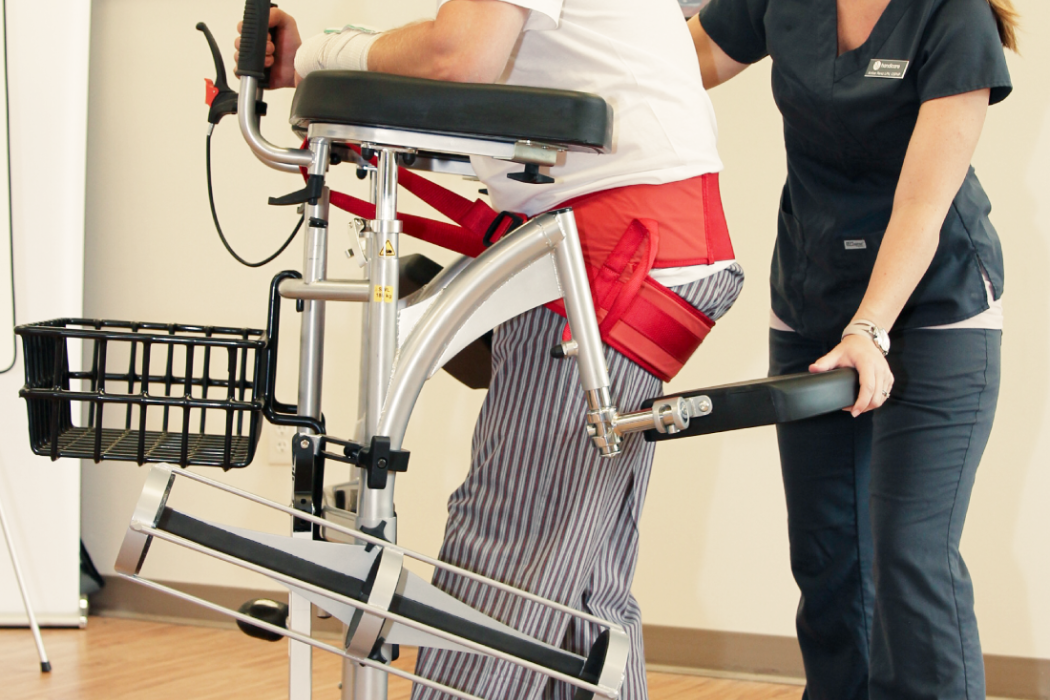
- Once the height is adjusted and the seat flaps are lowered, the patient takes first steps while the padded table and hand grips support the upper body.
- The device doubles as a mobile standing frame, useful at the bedside or anywhere in the facility.
The RoWalker consolidates support, equipment, and stability into one device, turning a daunting task into a manageable, repeatable step in recovery. Its engineering shows most clearly in the specific features that protect patients and staff during every walk.
Key Features That Set the RoWalker Apart
Every feature of the RoWalker serves one goal: helping patients move safely while feeling secure enough to take the next step.
- Innovative seat flaps: The built in split seat pads provide a comfortable resting spot mid walk and act as reliable fall prevention, giving patients the confidence to attempt more steps. The pads swing away and fold up to ease transfers in and out of the device.
- Stepless height adjustability: Height adjusts smoothly with no fixed increments, ensuring a precise fit for patients from short to very tall, with individually adjustable armrest and handlebar angles for optimal comfort and ergonomics.
- Padded forearm supports: Soft, adjustable forearm supports provide dependable upper body support for patients who need it most.
- Soft kneepads: These offer support during standing and protection during walking.
- Directional wheel locks: Rear directional castors keep the RoWalker tracking straight down the hall, while front brakes lock securely for sit to stand movements and rest.
- Width adjustable base: This allows the walker to be positioned close to chairs and wheelchairs for safe, easy access.
Accessories That Support Complex Patients
The RoWalker carries everything a complex patient needs, keeping lines and equipment secured and traveling with the patient:
- Oxygen tank holder: Secures oxygen so respiratory dependent patients can walk without staff managing loose tanks.
- Telescoping IV pole: Keeps intravenous lines organized and moving with the patient.
- Front basket for cardiac monitors: A customized basket carries cardiac monitors and other essentials, keeping everything secured and within reach.
- Drainage bag hooks: Keep surgical drains managed and tidy throughout the walk.
Picture a patient with weak legs who tires halfway down the corridor. Rather than risking an unsteady return trip, the patient simply rests on the split seat pads before continuing. What could have been a fall becomes a successful walk. The RoWalker’s features and accessories work together to help patients feel confident and secure, the emotional foundation that drives active participation in recovery. These same features carry an equally important benefit for the caregivers guiding each walk.
Staff Safety and Efficiency Benefits
By providing stable, engineered support, the RoWalker eliminates the need for two caregivers and removes the manual strain that makes ambulation one of nursing’s riskiest tasks.
Supporting an unsteady patient by hand forces staff into awkward, high load postures that biomechanical testing links directly to musculoskeletal injury. OHSU Biodynamics laboratory testing confirms that manual patient handling generates spinal loads far exceeding those required when assistive devices carry the task. The RoWalker changes that. Its ergonomic design lets a single staff member safely mobilize a patient the device physically supports. Freeing a second caregiver eases pressure in short staffed units, so mobility plans actually happen rather than being deferred to a quieter moment that never comes.
Consider a Med Surg unit that once required two nurses per walk. With the RoWalker, one staff member completes early mobility rounds safely, reclaiming hours of caregiver time each shift. The device supports SPHM goals directly:
- Eliminates manual patient support during ambulation
- Reduces caregiver back and shoulder strain
- Lowers the staff to patient ratio needed for safe walks
- Aligns with ANA and AORN SPHM standards
The RoWalker protects the workforce while making mobility programs genuinely feasible, a rare win for both safety and staffing. These advantages explain why the RoWalker has spread well beyond its original surgical roots.
Where the RoWalker Delivers Value
Though designed for cardiothoracic and abdominal surgery patients, the RoWalker has become a versatile early mobility solution used throughout leading hospitals:
- ICU: Safely mobilizes complex, equipment dependent patients to combat ICU acquired weakness.
- Med Surg: Supports routine post surgical ambulation with fewer staff members.
- Orthopedics: Provides stable, confidence building support for patients relearning to walk.
- Rehabilitation: Serves as a walking and standing training aid and doubles as a mobile standing frame.
Its small footprint fits any patient room, and its adaptability makes it a single, standardized solution across diverse care areas. That versatility points directly to the return a facility can expect from its investment.
ROI and Conclusion
The RoWalker delivers returns on two fronts at once: better patient outcomes and lower avoidable costs. Here is where the return shows up:
- Reduced length of stay and lower hospital costs
- Fewer immobility related complications
- Lower workers compensation and injury claims
- Improved patient satisfaction and outcomes
Immobility drives deconditioning, weakness, and complications, while early mobilization shortens stays and speeds recovery. The SPH Medical RoWalker makes early ambulation safe and practical, protecting patients from falls, protecting staff from injury, and easing staffing demands across the facility. The right device truly does turn a delayed, high effort walk into a safe, confident first step.
Start by assessing your current early mobility practices and identifying where delayed ambulation is quietly stalling recovery. Then bring the RoWalker to your SPHM or value analysis committee, where the evidence can guide an informed decision. The RoWalker is a straightforward, evidence based step toward safer patients, healthier staff, and stronger outcomes. Contact SPH Medical today to request a quote.