
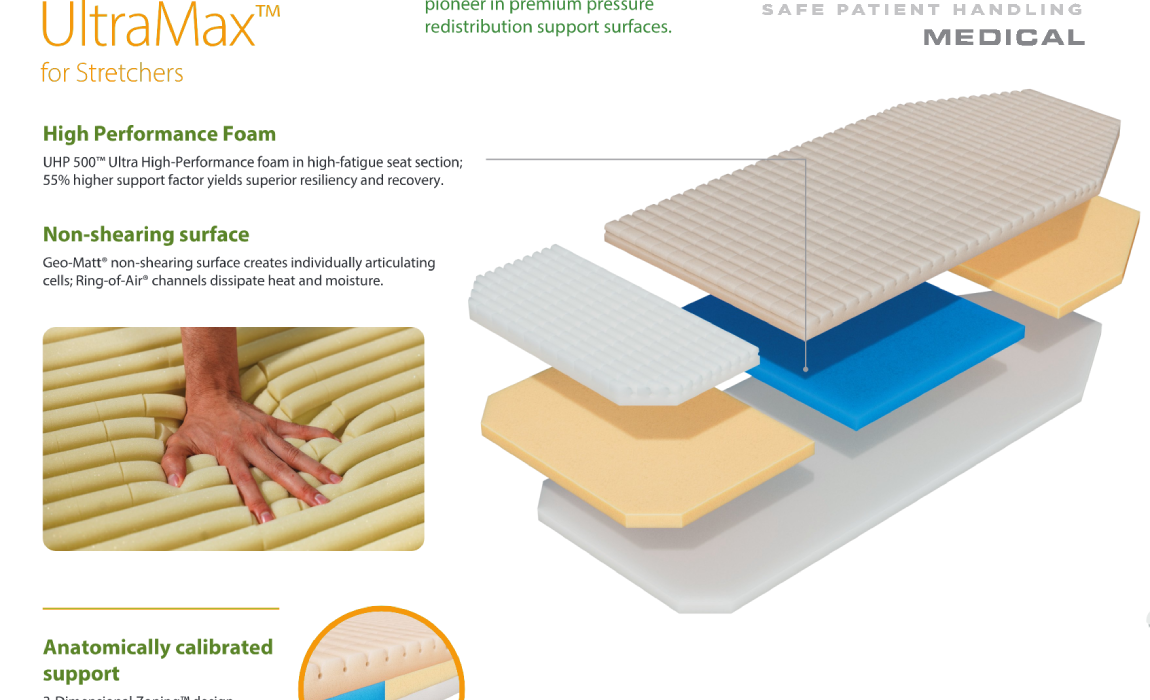
Picture a stretcher pad in a busy emergency department. The cover looks clean. The surface feels firm enough. From across the room, nothing seems wrong. Yet beneath that intact looking cover, the foam has cracked and compressed, and trapped fluids have seeped into the core where no cleaning cloth can reach. This pad passed every visual check, and it will carry dozens of patients this week. Each one deserves better.
Worn stretcher pads are a silent liability. They quietly raise the risk of pressure injuries, spread infection, and strain the staff who move patients across them, all long before any visible damage appears. Because stretcher surfaces cycle through more patients than almost any other equipment in a facility, that hidden decline matters enormously.
This article walks through why stretcher mattress replacement deserves a place on your safety agenda. As well as examin the value of replacing hospital stretcher pads with new mattresses.
Here is what you will take away:
- Why aging pads threaten patient skin integrity and safety
- How worn surfaces undermine infection control standards
- The ergonomic toll worn pads place on caregivers during transfers
- The clinical and financial return of modern mattress upgrades
- The regulatory expectations you cannot afford to overlook
Grounded in evidence based Safe Patient Handling and Mobility (SPHM) practice, and aligned with ANA and AORN standards, this discussion starts with a simple truth: patient safety begins with the surface beneath the patient.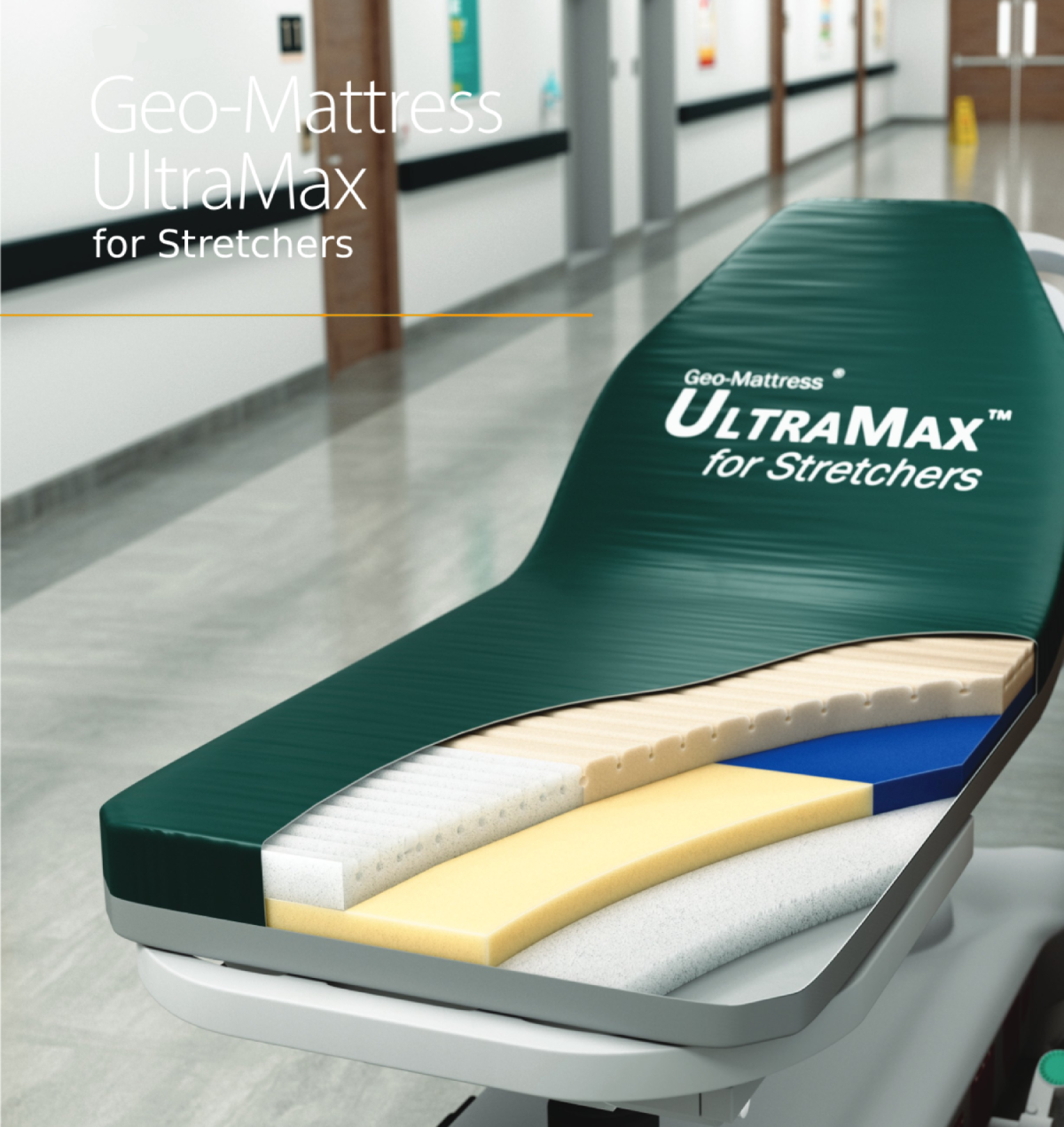
Patient Safety and Skin Integrity
How do degraded stretcher pads directly threaten patients? The answer starts with pressure redistribution, the single most important job a support surface performs.
A stretcher surface that has lost its pressure redistribution properties turns even a short procedural stay into a pressure injury risk. Over time and under constant weight, foam breaks down and “bottoms out.” When that happens, the surface can no longer spread the patient’s weight evenly. Instead, force concentrates on bony prominences such as the sacrum, heels, and shoulder blades, exactly the areas most vulnerable to tissue damage.
The problem grows worse because stretcher stays are rarely as brief as we assume. Patients in the emergency department, imaging suites, and preoperative holding areas often remain on these surfaces for hours. What the schedule calls “temporary” can easily stretch into a shift long stay on a surface never designed to protect skin for that duration.
Consider a patient held on a worn emergency department stretcher for six hours during a busy shift. By the time they reach an inpatient bed, early stage tissue damage may already be underway, an injury that began before formal admission and one that could have been prevented.
Wound care teams know the warning signs. A quick assessment can reveal a great deal.
Signs a pad no longer protects skin:
- Visible sagging or a permanent indentation that remains after the patient leaves
- Foam that fails to rebound promptly after compression
- Cover creasing that creates shear points against the skin
Modern stretcher mattresses restore reliable pressure redistribution, protecting vulnerable patients during the very intervals most facilities overlook. Skin protection, however, is only part of the picture. Surface integrity also governs infection control.
Infection Control and Hygiene Standards
Why are worn covers a genuine infection risk, and not simply a cosmetic concern? Because a compromised cover is not a blemish. It is a breach in your facility’s infection barrier.
Cracks, punctures, and worn seams allow fluids and pathogens to penetrate the foam core beneath the cover. Once contamination reaches the interior, it becomes untouchable. No surface wipe down, no matter how thorough, can reach the saturated foam inside. That hidden reservoir persists through every terminal cleaning, quietly undermining the protocols your infection prevention team works so hard to enforce.
The danger is that these surfaces often look acceptable. Imagine a biomedical engineer opening a cover during inspection and finding stained, saturated foam beneath a surface that passed every visual check. The pad looked fine at the bedside. Under the cover, it told a very different story.
This is where surface engineering earns its value. Fluid impermeable, antimicrobial covers with welded seams create a true barrier that blocks fluids from ever reaching the core. These surfaces directly support your goals for reducing healthcare associated infections (HAIs) and help keep cleaning protocols effective rather than merely hopeful.
Replacing aging pads with mattresses that feature welded seams and fluid resistant covers closes a hidden gap in your infection prevention strategy. Beyond the patient, the surface itself also shapes how safely staff can move them.
Caregiver Ergonomics During Patient Transfers
How do stretcher surfaces affect staff injury risk? More than most teams realize. Lateral transfers to and from stretchers rank among the highest risk patient handling tasks in any facility, and the surface directly influences the force those transfers require.
Worn, high friction covers increase the push and pull forces needed to move a patient during lateral transfers. Every added pound of resistance travels straight into the caregiver’s shoulders and lower back. Repeated across a shift, that strain accumulates into the kind of musculoskeletal injuries that sideline experienced staff and drive up costs.
Engineered surfaces work the opposite way. Low friction covers pair with air transfer mats and friction reducing devices to lower the biomechanical load on the body. The difference is not subtle. Biomechanical testing consistently confirms that assistive devices and low friction surfaces dramatically reduce spinal load compared with manual handling across a degraded surface.
Think of a preoperative team performing dozens of stretcher transfers per shift. When each transfer means dragging a patient across a worn, sticky surface, the cumulative strain compounds hour after hour. The surface becomes a daily injury risk hiding in plain sight.
Worn pad versus modern mattress transfer:
- Worn pad: higher friction, greater manual force required, elevated musculoskeletal risk
- Modern mattress: compatible with assistive devices, reduced force, safer handling for staff and patient
Upgrading surfaces supports your SPHM program directly by reducing the effort, and the injuries, tied to one of nursing’s most demanding tasks. These safety gains also carry measurable clinical and financial weight.
Clinical and Financial ROI of Modern Stretcher Mattresses
Does replacement pay for itself? The math is compelling once you weigh the true cost of doing nothing.
The cost of a new stretcher mattress is minor against the price of a single hospital acquired pressure injury or a single staff injury claim. A stage 3 or stage 4 pressure injury can cost tens of thousands of dollars in treatment, extended length of stay, and potential loss of reimbursement, since many of these injuries are considered preventable and are not reimbursed. One serious event can eclipse the cost of replacing surfaces across an entire unit.
Staff injuries carry their own heavy price. Every musculoskeletal injury tied to a difficult transfer means lost workdays, workers compensation claims, and the expense of covering an absent caregiver. Reducing those injuries protects both your people and your budget. Durable modern surfaces add further value by extending replacement cycles, which lowers long term equipment spending.
Where the ROI shows up:
- Fewer hospital acquired pressure injuries
- Reduced workers compensation claims and lost workdays
- Shorter lengths of stay tied to better skin outcomes
- Improved patient satisfaction and HCAHPS scores
- Extended surface durability and fewer premature replacements
Picture a value analysis committee comparing the one time cost of facility wide mattress replacement against the documented cost of preventable pressure injuries over a single year. When the numbers are laid side by side, replacement stops looking like an expense. It becomes a high return investment that aligns directly with process improvement and cost containment goals. Beyond the return, regulatory expectations make this a compliance issue as well.
Regulatory and Compliance Considerations
What standards apply to stretcher surfaces? More than many teams track, and aging surfaces can quietly put your facility out of step with accreditation and safety expectations.
Accreditation surveyors and infection control standards expect intact, cleanable surfaces that are free of cracks, tears, and damage. A pad with a compromised cover is a survey finding waiting to happen. SPHM programs guided by ANA and AORN standards further call for equipment that reduces manual handling risk, which places worn, high friction surfaces squarely in the spotlight. On top of these expectations, manufacturer guidance on surface lifespan and inspection frequency should anchor your replacement policy rather than being left to guesswork.
A structured approach keeps you ready.
Compliance readiness checklist:
- A documented surface inspection schedule with clear intervals
- Clear criteria for removing a surface from service
- Alignment with your SPHM and infection prevention policies
A proactive replacement program demonstrates due diligence and keeps your facility survey ready. Now it is time to bring these threads together into a clear path forward.
Worn stretcher pads compromise skin integrity, breach infection barriers, strain caregivers, and expose facilities to avoidable cost and compliance risk. That is four distinct threats carried by a single piece of equipment that too often escapes scrutiny. Modern stretcher mattresses address all four concerns at once, restoring pressure redistribution, sealing out fluids and pathogens, easing transfers, and protecting your bottom line.
Patient and staff safety truly do begin with the surface beneath the patient.
The most practical next step is a surface audit across your highest use areas. Walk the emergency department, imaging, preoperative holding, and the PACU. Open the covers, test the foam, and document what you find. Then bring those findings to your value analysis or SPHM committee, where the evidence can drive an informed decision.
Stretcher mattress replacement is a straightforward, evidence based step toward safer patients, healthier staff, and a stronger bottom line. Few investments in patient safety deliver so much for so reasonable a cost.
Frequently Asked Questions
How often should hospital stretcher pads be replaced? There is no single universal interval, because replacement depends on usage volume, cleaning practices, and manufacturer guidance. High traffic surfaces in the emergency department or PACU wear faster than those used occasionally. The best practice is a documented inspection schedule paired with clear criteria for removal from service, so decisions rest on condition rather than guesswork.
How can I tell if a stretcher pad has bottomed out? Press firmly on the surface and watch how it responds. Foam that fails to rebound promptly, shows a permanent indentation, or lets you feel the rigid base underneath has likely bottomed out. Visible sagging is another clear sign. Once a pad reaches this state, it no longer redistributes pressure and should be removed from service.
Do modern stretcher mattresses really reduce transfer injuries? Yes. Low friction surfaces reduce the push and pull forces required during lateral transfers, and they pair effectively with air transfer mats and friction reducing devices. Biomechanical testing consistently shows that assistive equipment and low friction surfaces lower spinal load compared with manual handling. That reduction translates directly into fewer musculoskeletal injuries among staff.
Are worn covers actually an infection risk if the surface looks clean? Absolutely. A cover can look clean while cracks, punctures, or worn seams allow fluids and pathogens to reach the foam core beneath. Once contamination penetrates the interior, no surface cleaning can remove it, creating a hidden reservoir that persists through terminal cleaning. Intact, fluid impermeable covers are essential to a genuine infection barrier.
How do I justify replacement costs to a value analysis committee? Frame the conversation around avoided costs. Compare the one time price of replacement against the documented cost of preventable pressure injuries, workers compensation claims, extended lengths of stay, and lost reimbursement. When presented side by side, the return on investment is clear, and replacement aligns naturally with process improvement, safety, and compliance goals.