SPH Medical EPD 4
CategoriesInfection Prevention,  Patient Handling

The EPD and Air Transfer System Improve Patient and Staff Safety

SPH Medical is Improving Safety for Hospital Staff and Patients

SPH Medical is here to improve patient staff safety in labor and delivery and surgical units with the Epidural Positioning Device and the air transfer system.

COVID-19 is putting our healthcare workers at risk. Manually handling patients under normal conditions is known to put our nurses, doctors, and other healthcare workers at risk. Now more than ever hospital staff need to have the right tools to help move, support, lift and transfer patients. The EPD and air powered lateral transfer system improve patient and staff safety especially during this time of heightened concern about infection prevention.

SPH Medical Provides Safe Patient Handling Solutions to Healthcare Facilities

SPH Medical provides Safe Patient Handling solutions to healthcare facilities which means that we protect our frontline caregivers by preventing infection and injuries.

Within Hospitals nurses are being asked to care for patients infected with Cov-Sars2 and other deadly viral and bacterial infections. In order to deal with these deadly infections the Infection Control Nurse within the hospital mandates that single patient use devices are used where possible to lift move and transfer patients. Single patient use items are essentially disposable items that are patient specific, which means that they don’t get used with other patients. The outside laundry system generally isn’t trusted with returning specialized items or hospital owned items back to the hospital so then hospital is forced to use “disposable” items where possible to minimize the risk of infection to other patients. At times this can seem costly, but the risk and cost of hospital acquired infections and and nursing injuries is well with the investment.

How Does this Relate to One of the Most Important Departments in the Hospital?

The Labor and Delivery department is where new mothers give birth to their children in what should be safe and infection free environment.

A large percentage of mothers are continuing to get cesarean section procedures (cite sources and %) even in today’s COVID-19 environment.

With the c-section procedure comes several high-frequency patient handling tasks that Put our nurses and doctors at risk every day, lateral transfers to the OB OR table and patient positioning during the epidural injection procedure.

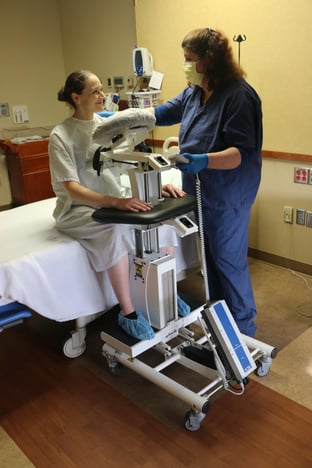
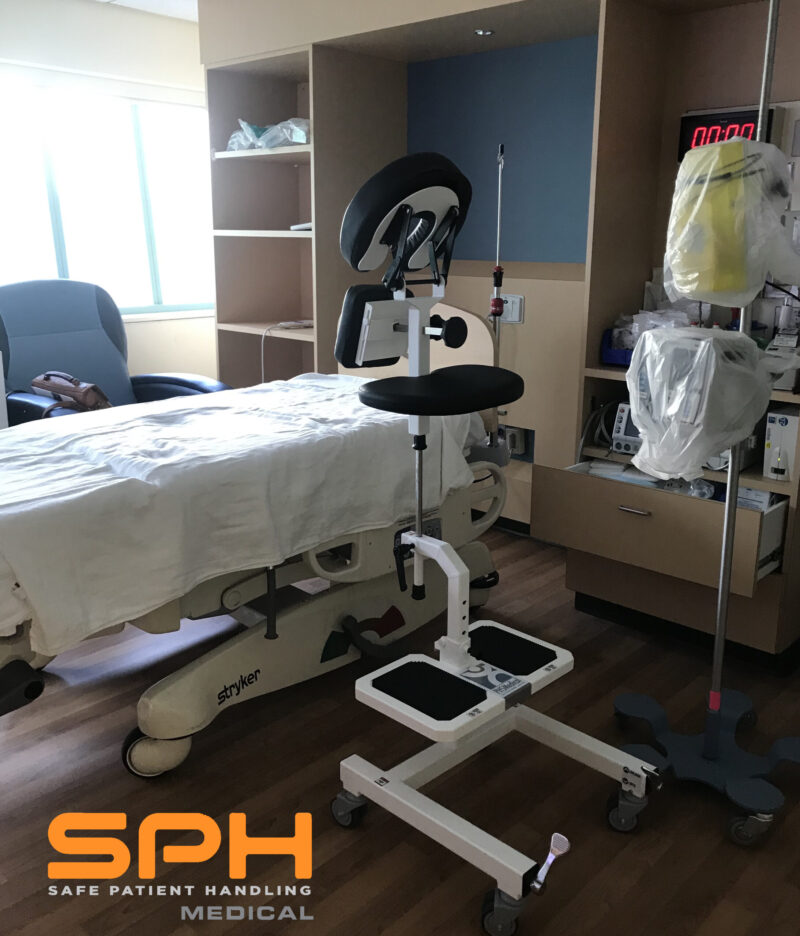
First the Epidural. Positioning the patient in the proper position for the injection puts our nurses at risk of injury. (See other blog posts we’ve written). We solve this my by making the patient comfortable and eliminating the static holding by the nurse with the Epidural Positioning Device.

Once the patient has received the epidural successfully and the are ready to be moved to the OB OR for the C-section procedure that staff have to plan how to move the patient on and off the table safely. Keep in mind the patient can’t scoot across to the table. They can’t feel their lower half! The staff need to use a assistive tool to transfer the patient safely on and off the OR table. What solutions are available to accomplish this?

Lateral Transfer Devices Available on the Market

There are a variety of lateral transfer devices available on the market to help transfer patients safely to and from beds, gurneys, OR tables, and Imaging Tables.

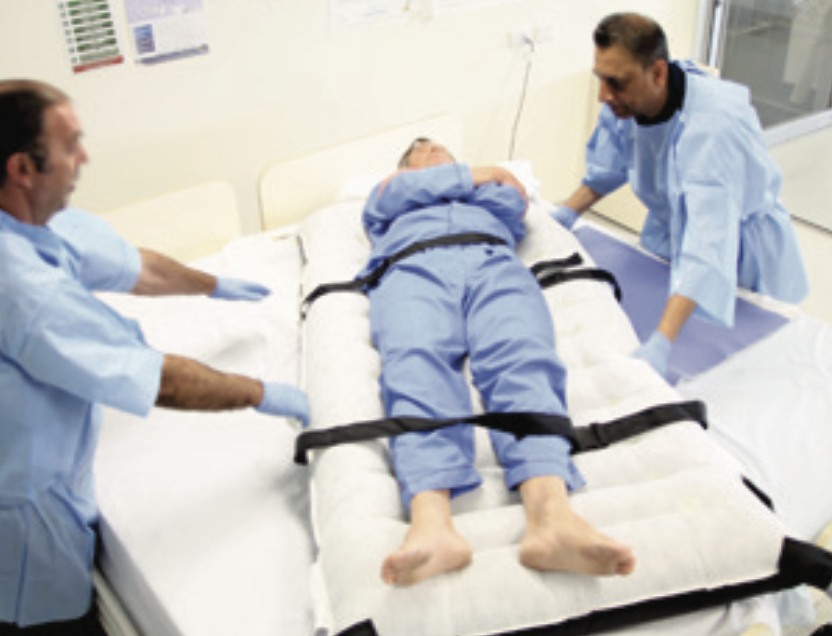
There are simple Friction Reducing Devices such as slide sheets (“easy slide disposable“ from SPH Medical) Available in many styles: flat sheets with handles, tube style sheets, there are lateral transfer boards made out of plastic also called slider boards – these are not ideal as they don’t significantly reduce friction to safe levels, there are roller boards like the Rollerslide by SPH Medical which act like a conveyer belt moving with the patient. Finally the gold standard of lateral transfer solutions is the air powered lateral transfer system which floats the patient on a comfortable layer of air between the two surfaces. This   makes the transfer process not only more comfortable for the patient but also eliminates risk of injury to the nursing and hospital staff performing the transfer. You can find a well documented clinical evaluation on Friction Reducing Devices here by Andrea Baptiste, MA, CIE, Sruthi V. Boda, MS, Audrey L. Nelson, PhD, RN, FAAN, John D. Lloyd, PhD, MErgS, CPE, and William E. Lee, III, PhD.

All Employees Should be Wearing the Appropriate Fluid Rated N95 Respirators

All employees should be wearing the appropriate fluid rated N95 respirators like the Makrite 9500-N95 which is FDA 510K approved for use as a surgical mask.

Summary

The EPD and air powered transfer system improve patient and staff safety. SPH Medical provides a total solution to reduce risks of infection and injury to our frontline caregivers in Labor and Delivery and throughout the hospital. This is not limited to Labor and Delivery departments. We are addressing similar risks throughout the entire hospital and continuum of care helping to create new standards for safety and protection of our healthcare workers. This is not about obesity and COVID. This is about caring for every patient and every nurse to improve patient outcomes and reduce risks of Infection and injury related to MSD’s and high-risk, high-frequency patient care tasks.

Please contact SPH Medical to learn more about improving safety in Labor and Delivery with air transfer systems and the EPD. To learn more about the Makrite N95 Mask options including the 9500-N95 and the SEKURA-N95.

CategoriesPatient Handling

Patient Positioning During Thoracentesis Solved

Major Advancements in Safe Patient Positioning during Thoracentesis

Over the past two decades we have seen major advancements in patient care. This includes many new Safe Patient Handling Solutions developed to help our nurses and caregivers avoid the risk injury. Manual patient handling is one of the leading causes of back injuries for nurses. Many States have put laws in place to mandate that hospitals have a Safe Patient Handling program. This includes evaluating all inpatient units for high risk tasks that involve lifting, pushing, pulling, or prolonged static holds. Then the hospital should evaluate solutions to mitigate the risk. Here we are in 2020 and manual patient handling has not been eliminated yet!

We have been receiving phone calls from hospitals around the country describing a very common procedure. It is putting their ultrasound/imaging team at risk of injury on a daily basis. The procedure is called Thoracentesis and the issues are patient positioning during Thoracentesis.

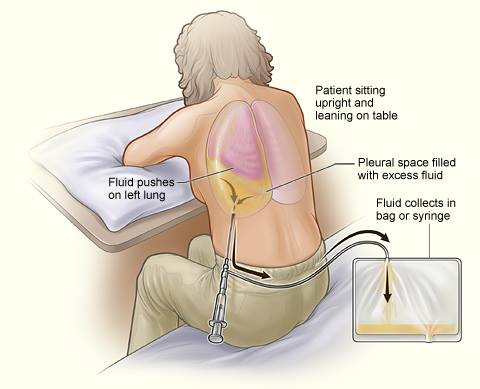
Thoracentesis is also known as thoracocentesis or pleural tap. It is an invasive procedure to remove fluid or air from the pleural space for diagnostic or therapeutic purposes. A cannula, or hollow needle, is carefully introduced into the thorax, generally after administration of local anesthesia.

One Ultrasound Manager at leading hospital found our website and the EPD – or Epidural Positioning Device. She contacted us and thought this would be perfect for their situation.

Here’s a brief description:

This hospital sees both inpatients and outpatients for Thora’s (That’s short for Thoracentesis). They’re performing about 3-6 procedures per day, seven days a week.

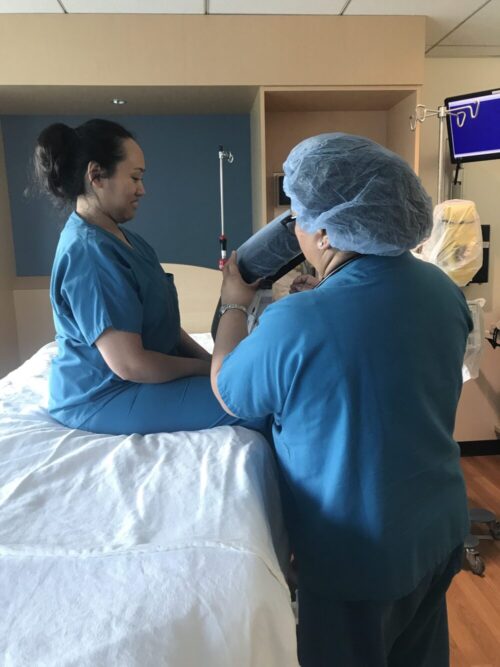
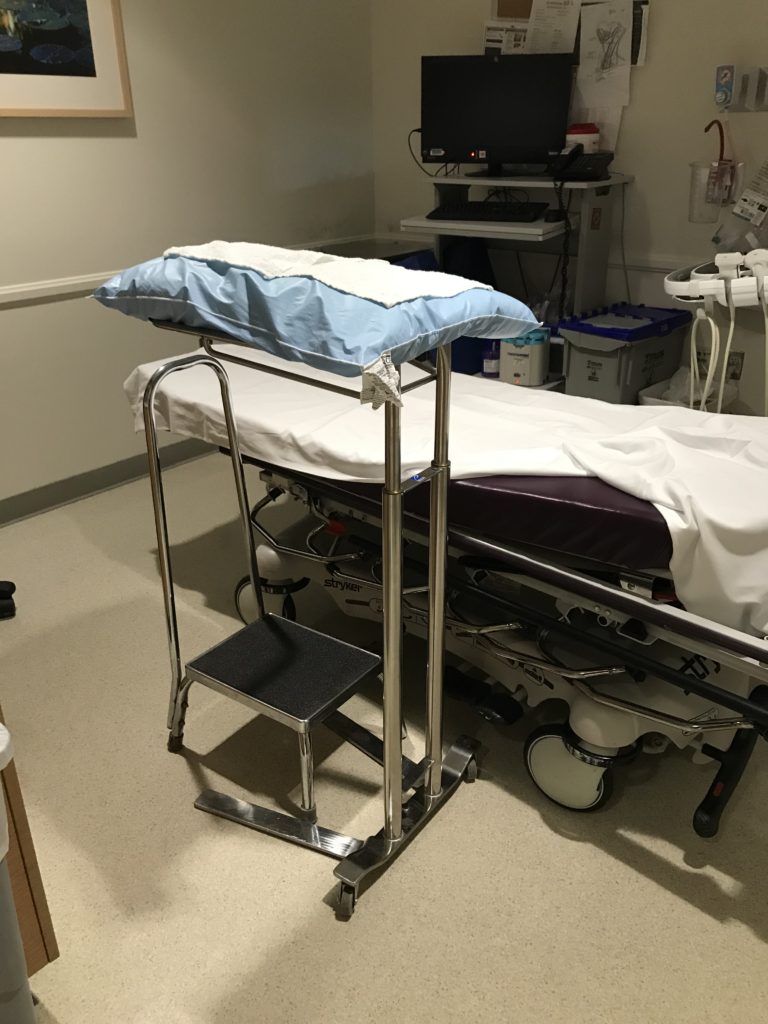
A Nurse or LPN helps assist to position the patient. The patient is seated on a gurney or table. The Nurse brings over a stool to support their feet. Then moves a bedside tray table over in front of the patient. Next they stack the table with pillows so the patient can lean on it comfortably. But, the table does not lock and it is a tip hazard!

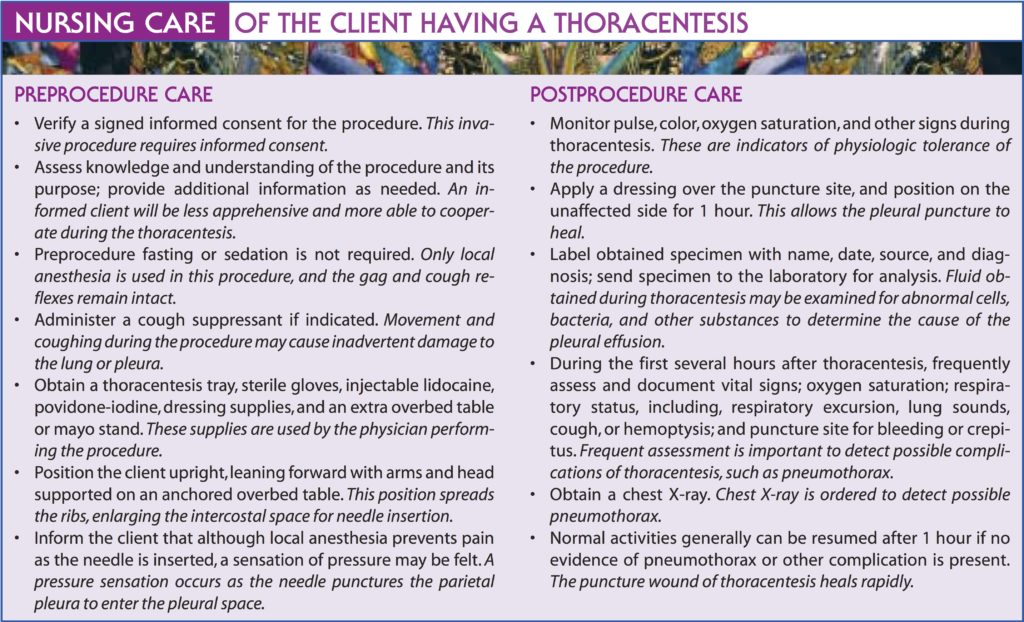
We found this reference card on the web describing the old fashioned manual positioning of patients during Thora’s

thoracentesis Nursing Care Patient Prep

Which patients are getting Thoracentesis? There are many types of patients with varying diagnoses that need to undergo this procedure. People get “plural effusion” which is fluid around the lungs. A large number of patients are cancer patients but many are also heart and infections.

Thoracentesis Procedure

Thoracentesis procedure

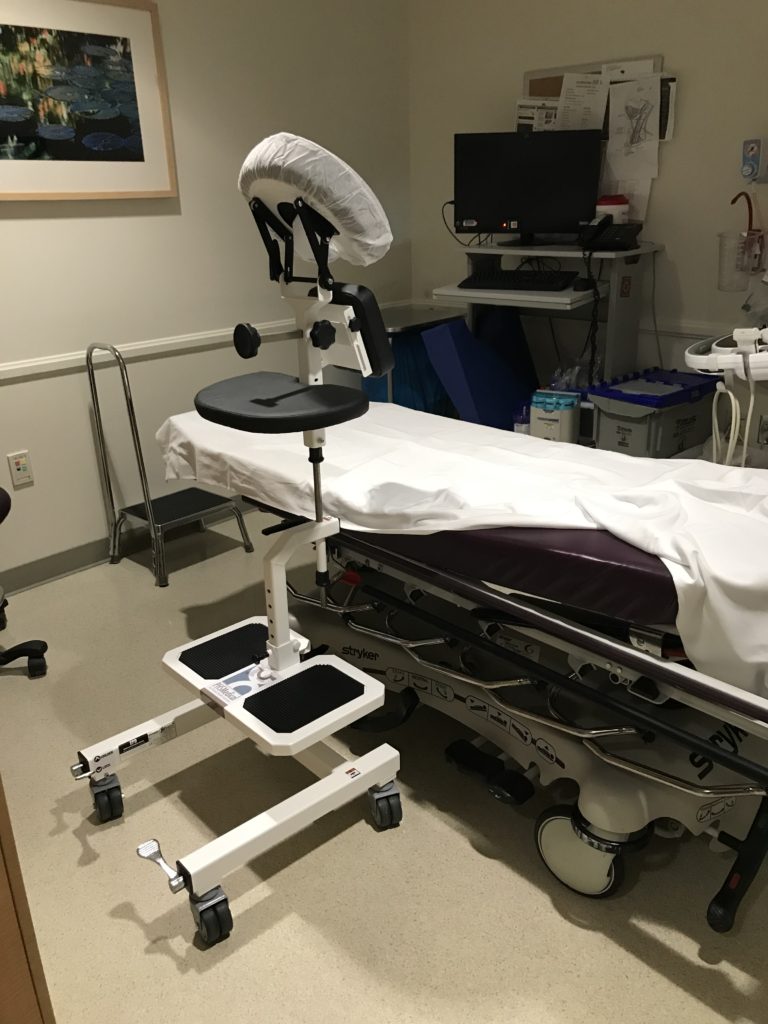
How are we solving this predictable procedure and all the manual patient handling – static holds, fall risk, etc? The SPH Medical Epidural Positioning Device is the key. It was designed by an anesthesiologist to help position patients properly and to open up the spine for ideal needle placement of an Epidural or Spinal Block. It has now become the standard of care for L&D and surgery departments. Now the Radiology/Imaging department has discovered it and we’re helping the ultrasound team and Pulmonologists position patients safely and efficiently.

We have few photos from a recent customer that has implemented the EPD. Here are the before and after photos. Please feel free to Contact us for more information about the EPD and Thora’s. We would be happy to connect you with to our customers who are now using the EPD for all of their Thora’s and creating a safer environment for their staff and patients.

Thoras Before

A Typical Thoracentesis set up with a stool and non-locking tray table with pillows.

Thoras After with EPD

Now with the EPD – Ergonomic patient positioning that supports the patient safely and eliminates manual handling!

CategoriesPatient Handling

Keeping Staff and Patients Safe in OR and Radiology with the EPD

The EPD and E-EPD were developed to reduce the risk of injuries and improve safety among staff and patients. By implementing the use of EPDs, hospitals can actively protect their staff and improve patient outcomes.

E-EPD-IMG_3584

Safe Patient Handling

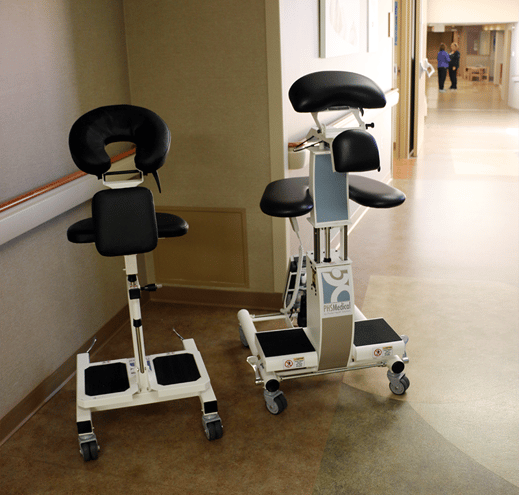
EPDs are used in numerous medical settings including labor and delivery, general surgery, operating rooms, anesthesiology, radiology and orthopedic departments. These are all settings in which epidurals, spinal blocks, x-rays and Thoracentesis procedures are performed. Keeping patients safe and comfortable while avoiding injuries is an extremely important factor for every medical facility. EPDs correctly and effectively position patients to do just that. They create a sturdy, steady and comfortable place to assist in holding patients in place while their procedure is performed.

Reducing Risks to Staff 

Hospitals and medical facilities are responsible for keeping their nurses and support staff safe. Plans to keep staff injury-free include providing them with the right tools. EPDs eliminate back pain and body strain that nurses can endure while assisting with tradition positioning methods associated with epidurals and like procedures. It is important to keep nurses and hospital staff healthy and performing at their best. EPDs make this easy. They position and support patients correctly and easily so that nurses don’t have the pressure and physical load of holding patients in a stable position for a long period of time. This can cause a lot of strain and be uncomfortable, especially if the patient is larger than the nurse.

Download EPD Package Data Sheet

Download E-EPD Data Sheet

EPDs_hallway-1

EPDs and E-EPDs are a clearly defined safety need in hospitals. Not only do they keep patients safe, they help keep the hospital staff safe as well. They help eliminate errors, injuries and accidents which directly increases patient and nurse satisfaction. EPDs are easy to implement and use, making it a simple decision when it comes to protecting staff and patients.


Contact SPH Medical for more information about supporting your patient and staff safety goals.

info@sphmedical.com

1-844-377-4633

www.sphmedical.com

Add to cart