Revolutionizing Recovery with SPH Medical RoWalker for Early Mobility
Categoriesearly mobility,  Patient Handling

Revolutionizing Recovery with the SPH Medical RoWalker

Revolutionizing Recovery with RoWalker: How Leading Health Systems Are Implementing Early Patient Mobility with the RoWalker

The paradigm of patient recovery has shifted fundamentally. In top-tier health systems across the country, prolonged bed rest is no longer the default for high-acuity patients. Instead, these institutions are embracing a new standard of care: early patient mobility. This proactive approach is critical for reducing complications, shortening hospital stays, and improving long-term outcomes. At the center of these successful programs is the SPH Medical RoWalker, a revolutionary technology that bridges the gap between bed rest and independent ambulation.

The Paradigm Shift to Early Mobility

For decades, bed rest was prescribed as a primary component of recovery. However, modern clinical evidence confirms that immobility is often more dangerous than the condition being treated. The detrimental effects of bed rest—severe muscle atrophy, increased risk of pneumonia, development of pressure injuries, and psychological decline—begin within hours of admission.

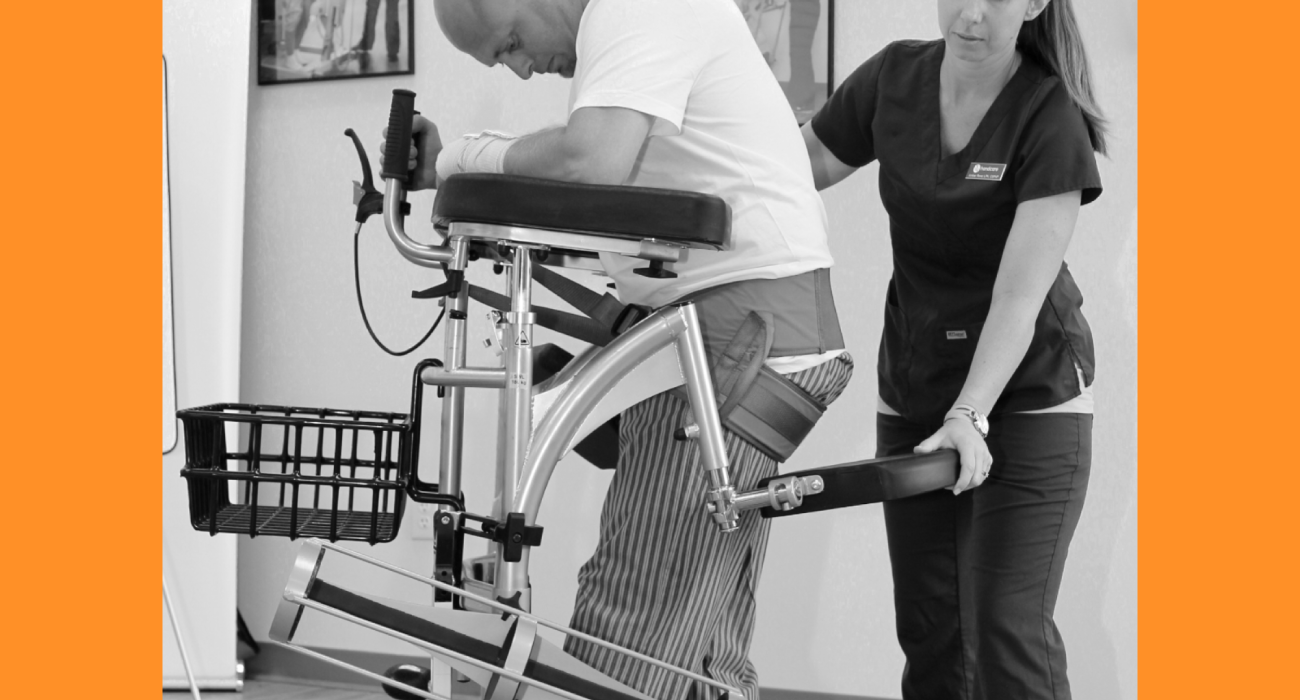
Leading health systems have recognized that to combat these risks, patients must move early and often. The challenge has always been safety: how to mobilize weak, unstable patients without risking falls or causing injury to the nursing staff. The RoWalker solves this critical problem. “You have literally revolutionized early mobility with the RoWalker” said one customer. It is not merely a walker; it is a comprehensive mobilization platform designed to facilitate safe, early ambulation for patients who are too weak for standard equipment but need to move to recover.
Revolutionizing Recovery with SPH Medical RoWalker for Early Mobility 2026

Clinical Evidence: Why Early Mobility Programs Are Essential

The adoption of early mobility protocols is driven by irrefutable clinical data. Hospitals that prioritize movement see measurable improvements in patient health and operational efficiency.

Improving Patient Outcomes

The physiological benefits of early ambulation are profound.

  • Muscle Preservation: ICU-acquired weakness is a significant complication of critical illness. Early mobility prevents the rapid decline of muscle mass, preserving the patient’s functional independence.
  • Respiratory Health: Upright positioning and movement significantly improve lung expansion and secretion clearance, directly reducing the incidence of ventilator-associated pneumonia (VAP) and other respiratory complications.
  • Psychological Well-being: Immobility contributes to delirium and depression in hospitalized patients. Mobile patients are more alert, engaged, and experience better mental health outcomes, which speeds up the overall recovery process.

Operational and Financial Impact

Beyond clinical benefits, early mobility programs deliver a substantial return on investment for healthcare facilities.

  • Reduced Length of Stay (LOS): There is a direct correlation between early mobility initiatives and shorter stays in both the ICU and the general medical-surgical units. Getting patients moving gets them home faster.
  • Cost Reduction: By reducing LOS and preventing costly complications like hospital-acquired pressure injuries (HAPIs) and falls, facilities can save significantly on non-reimbursable treatment costs.

The RoWalker: The Centerpiece of Successful Mobility Programs

Implementing an early mobility program requires more than just policy changes; it requires the right equipment. The RoWalker serves as the essential bridge for patients transitioning from bed rest to standing. It is the only device that fully satisfies the rigorous demands of both Nursing and Physical Therapy departments.

Collaborative Success for Clinical Teams

For nurses, the RoWalker is a game-changer for staff safety. It eliminates the physical burden of manually supporting a patient’s weight during ambulation. Nurses can confidently mobilize patients without the fear of back strain or musculoskeletal injury, aligning with Safe Patient Handling (SPH) standards.

For physical therapists, the device acts as a force multiplier. It allows for longer, more productive therapy sessions. Because the device handles the safety and support aspects, therapists can focus entirely on gait training mechanics and functional improvement rather than expending energy just to keep the patient upright.

Engineered for the Clinical Environment

The RoWalker is engineered specifically for the complex hospital environment. Its design features address the practical challenges of mobilizing high-acuity patients.

Unmatched Safety and Support

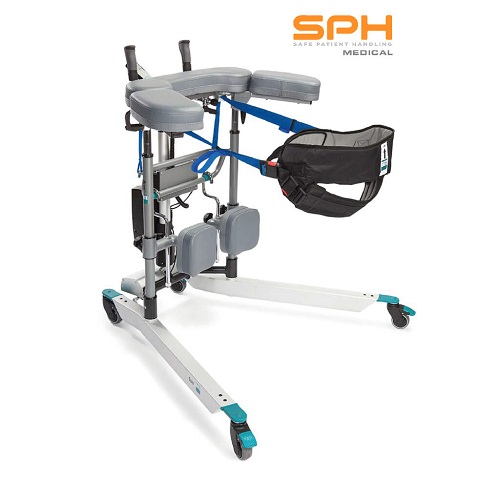
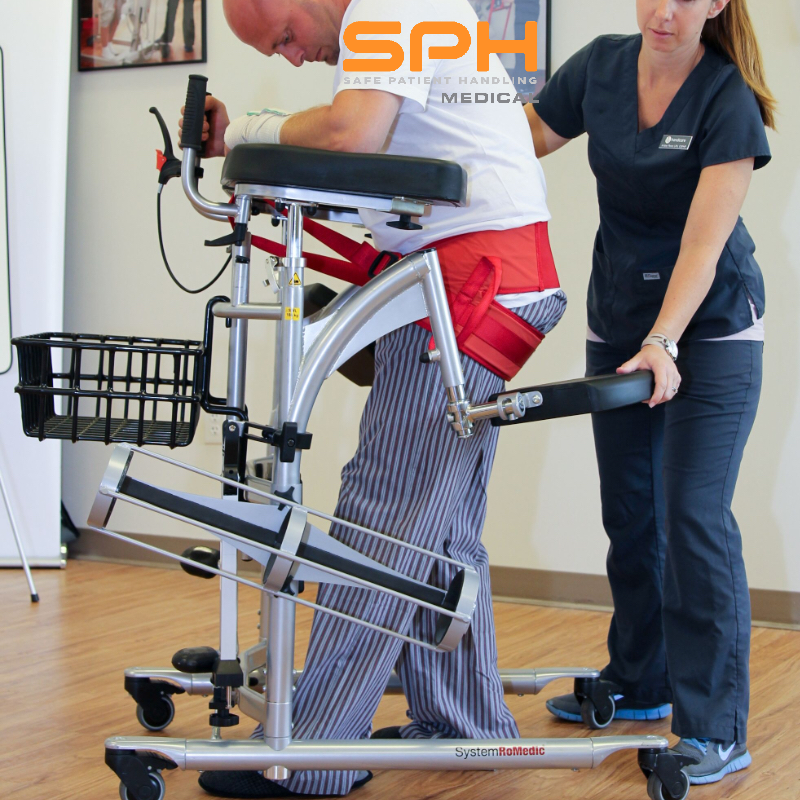
  • Stepless Height Adjustment: The electric height adjustment capability is a critical safety feature. It allows patients to transition from sitting to standing with powered assistance. The height can be adjusted easily to provide customized, ergonomic support for patients of any stature.
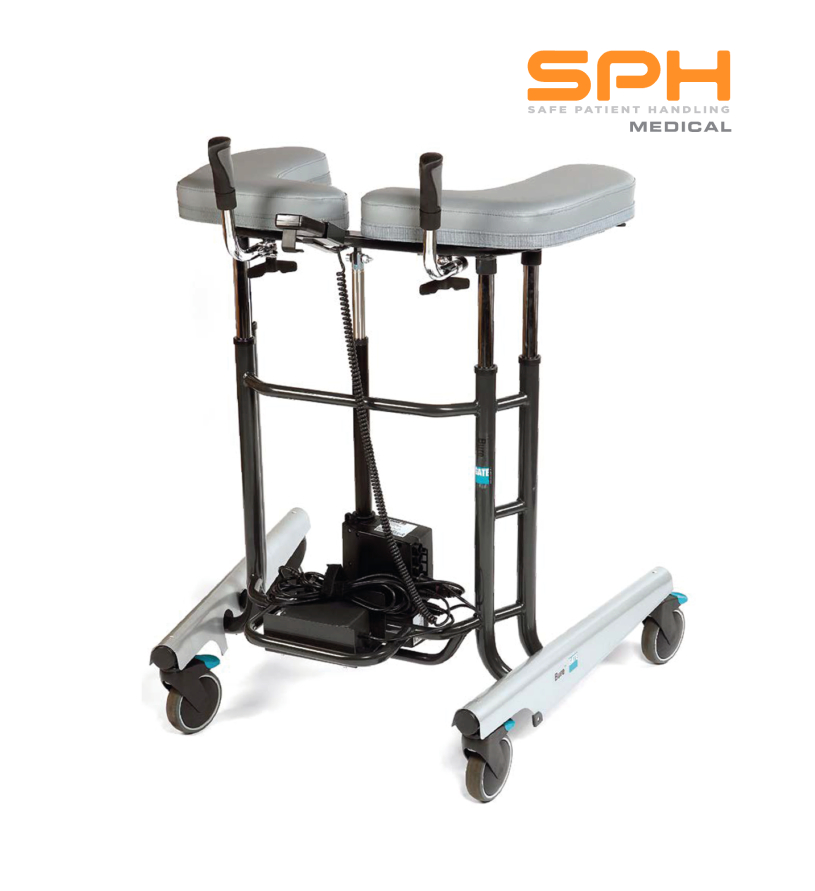
  • Padded Armrests: Unlike standard walkers that require hand grip strength, the RoWalker features wide, padded armrests. This allows patients to bear weight through their forearms and upper body, reducing fatigue and enabling those with weak grip strength to mobilize safely.
  • Built-in Seat Pads: Safety is paramount during early mobilization. The integrated safety seat pads provide an immediate resting spot. If a patient becomes fatigued or dizzy mid-session, they can simply sit down safely within the device, preventing falls.

Integrated Patient Care Equipment

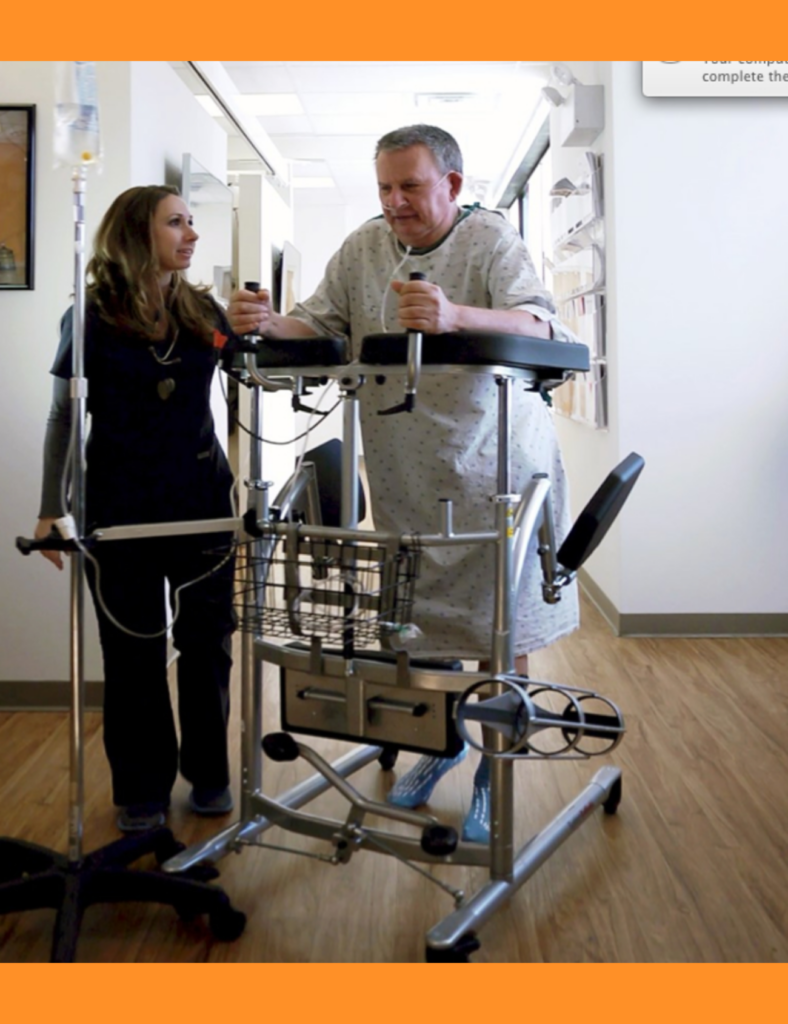
One of the biggest barriers to mobilizing ICU patients is managing the “tether” of equipment. The RoWalker consolidates these necessities into a single, mobile unit.

  • Oxygen Tank Holder: The dedicated holder eliminates the need for a second staff member to trail behind the patient carrying an O2 cylinder, streamlining the process.
  • Front Basket: A sturdy front basket provides a secure location for cardiac monitors, chest drains, or the patient’s personal items, keeping hands free for support.
  • IV Pole Integration: With a built-in IV pole, the RoWalker becomes a self-contained mobilization system. Lines and tubes are managed safely, reducing the risk of dislodgement during movement.
  • The evidence is clear: early mobility is the key to better outcomes, reduced lengths of stay, and safer hospitals. However, a protocol is only as good as the tools available to execute it. Leading health systems are choosing the RoWalker because it transforms the concept of early mobility from a difficult task into a safe, routine standard of care.

Implementing the RoWalker demonstrates a commitment to clinical excellence, staff safety, and superior patient recovery. Do not let outdated equipment hinder your facility’s performance.

Elevate your standard of care today.
Contact SPH Medical to request a quote for the RoWalker and empower your patients to get back on their feet sooner and safer.
Early Patient Mobility improves outcomes
Categoriesearly mobility

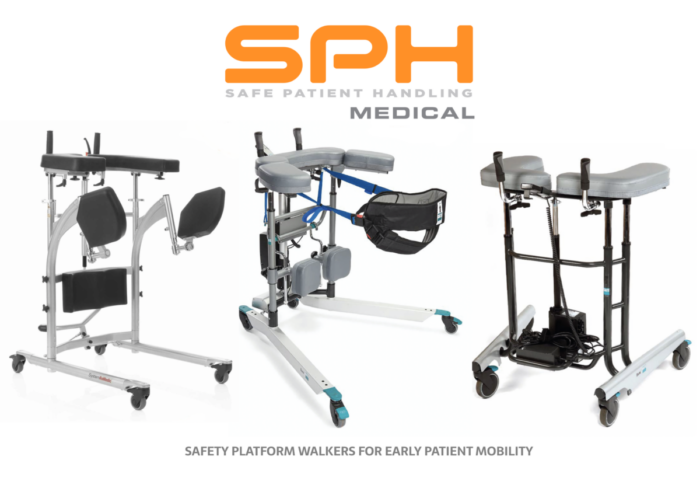
Safety Platform Walkers

A Practical Solution for Early Mobility in the Acute Care Setting

By Amber Perez MHA, CSPHP


The benefits of early and progressive mobility programs are well-established in the acute care setting. Greater than a decade of published research validates the positive patient outcomes associated with implementing an early mobility (ICU-Based) and progressive mobility (acute care inpatient) program as an essential part of the patients plan of care. Marra and Ely of Vanderbilt University published the groundbreaking research establishing an intensive care patient protocol the ABCDE (now the ABCDEFG) method for reducing the risk of Delirium in ICU patients.  Delirium, once under-diagnosed and rarely treated, is now recognized as a primary indicator for mortality and identified early in most ICU’s in the United States. Vanderbilt University’s groundbreaking results contributed to drastic improvements in the quality of life and mortality rates of an immeasurable number of patients as a result of widespread adoption of the methods and tools published in the protocol. One of the key components of the ABCDE method is the ‘E’ or Early Mobility intervention. Subsequent research further identifies benefits of mobility (early and progressive) to include reduced risk of hospital acquired pressure injuries, ventilator acquired pneumonias, patient falls, hospital readmissions, and length of stay. In addition, patients experience an improved discharge disposition1.

Hospitals all over the world are prescribing mobility as a standard component of patient care. While mobility programs offer exciting and promising outcomes and quality improvements for patients, it is not without challenges and risk. Without proper planning and integration with a facility Safe Patient Handling & Mobility (SPHM) program, risk for patient handling injury and patient falls risk increase.

In an independent survey of ICU and Hospital nursing leaders – the barriers reported with early mobility protocol implementation include: lack of caregiver resources, increased risk of patient falls, and risk of patient handling injury. In addition, nursing leaders reported greatest concern with “out of bed activities” specifically, “standing and ambulation”. Many leaders reported having advanced ICU beds capable of assisting with many tasks of the early mobility protocols- including, tilt table/ hemodynamic training, sitting, edge of bed, and early weight bearing. The greatest concerns for staff and caregiver safety emerged around patient standing and walking. Of the nursing leaders surveyed, the equipment used to assist in standing and walking patients ranked as most preferred for mobility activities as follows:

  1. ICU/Inpatient Safety Walkers 66%
  2. Ceiling lift with walking sling 24%
  3. Mobile lift with walking sling 8%
  4. Mechanical stand aid with removable footplate 2%

The following are comments captured on the survey related to each category:

ICU/ inpatient Safety walkers:
“Safest option available”, “Fits well in crowded rooms”, “Allows us to walk patients out of the room”, “Staff prefer this option”, “Intuitive, easy to operate”, “O2, IV and devices have a place to go on the walker”

Ceiling lift with walking sling:
“Not all rooms have ceiling lifts”, “Only works well with a XY ceiling track”, “We do not have dedicated walking slings” “Great option if we can find the walking slings” “limited to in room activity”

Mobile lift with walking sling:
“Mobile lifts are too big and bulky in the ICU room” “Cumbersome”, “No place to put O2 or devices”, “Improved safety, prevents falls”

Mechanical stand aid with removable footplate:
“Footplate not removable on our device”, “Not a good option for an unsteady patient”, “no place to put oxygen or IV”

Based on the majority of feedback, utilizing a safety platform walker is the preferred equipment for accessibility, safety, function, and efficiency.

Below is a decision table to help you identify which safety platform walker is right for you.   

  • Walker
  • Features
  • Patient specific recommendations

RoWalker FeaturesMobilize Patients Early and Safely

  • 400lb weight capacity
  • Fixed seats that rotate and flip
  • Directional locking castors
  • Accessory basket
  • O2 tank and IV pole holder
  • Manual height adjustment
  • Width adjustable platform

RoWalker – Patient specific recommendations

  • Ideal for patients able to come to a standing position independently
  • Consider when sling management is a barrier
  • Simple and intuitive
  • Higher weight capacity
  • Conducive to therapy activities
  • Consider for patients with sternal precautions

Rise & Go Platform Walker Features

  • 330lb weight capacity
  • Safety sling with hygiene strap
  • Accessory basket
  • O2 tank and IV pole holder
  • Power stand assist
  • Directional locking castor available
  • Extra-wide adjustable platform
  • Swing away shin pads
  • Splash/water resistant design

Rise & Go Platform Walker – Patient specific recommendations

  • Ideal for deconditioned ICU level early mobility – power stand assist
  • Hygiene strap on sling allows OT’s to work with patient on ADL’s- water resistant design allows bathing therapy sessions with limited water spray
  • Swing away shin pads allow for progression in ambulation
  • Ideal for taller and smaller patients, longest stroke length on actuator
  • Small footprint for easy storage

XL Platform Walker Features

  • 500lb weight capacity
  • Extra wide frame adjustments
  • O2 tank and IV Pole holder
  • Accessory basket
  • Shin pad accessory- removable
  • Extra wide adjustable platform

XL Platform Walker – Patient specific recommendations

  • Ideal for ambulatory bariatric patients
  • Power rise assists with sit to stand
  • Ideal for patients who are not a high fall risk
  • Patients with O2 and IV’s may be useful with therapy.

References:

  1. Winkleman C, Johnson K, Hejal R, et al. Examining the positive effects of exercise in intubated adults in the ICU: a prospective repeated measure clinical study. Intensive Critical Care Nursing. 2012


  1. Vollman K. Early progressive mobility: strategies for successful and safe achievement to impact short and long-term outcomes. 


  1. Roberts M, Johnson LA, Lalonde TL. Early mobility in the intensive care unit: Standard equipment vs a mobility platform. American Journal of Critical Care.


  1. Marra A, Frimpong K, Ely EW. The ABCDEF Implementation Bundle. Korean Journal of Critical Care Medicine (2383-4870). 2016


  1. Pottenger BC, Pronovost PJ, Kreif J, et.al. Towards improving hospital workflows; an evaluation of resources to mobilize patients. Journal of Nursing Management. 2019
Add to cart