
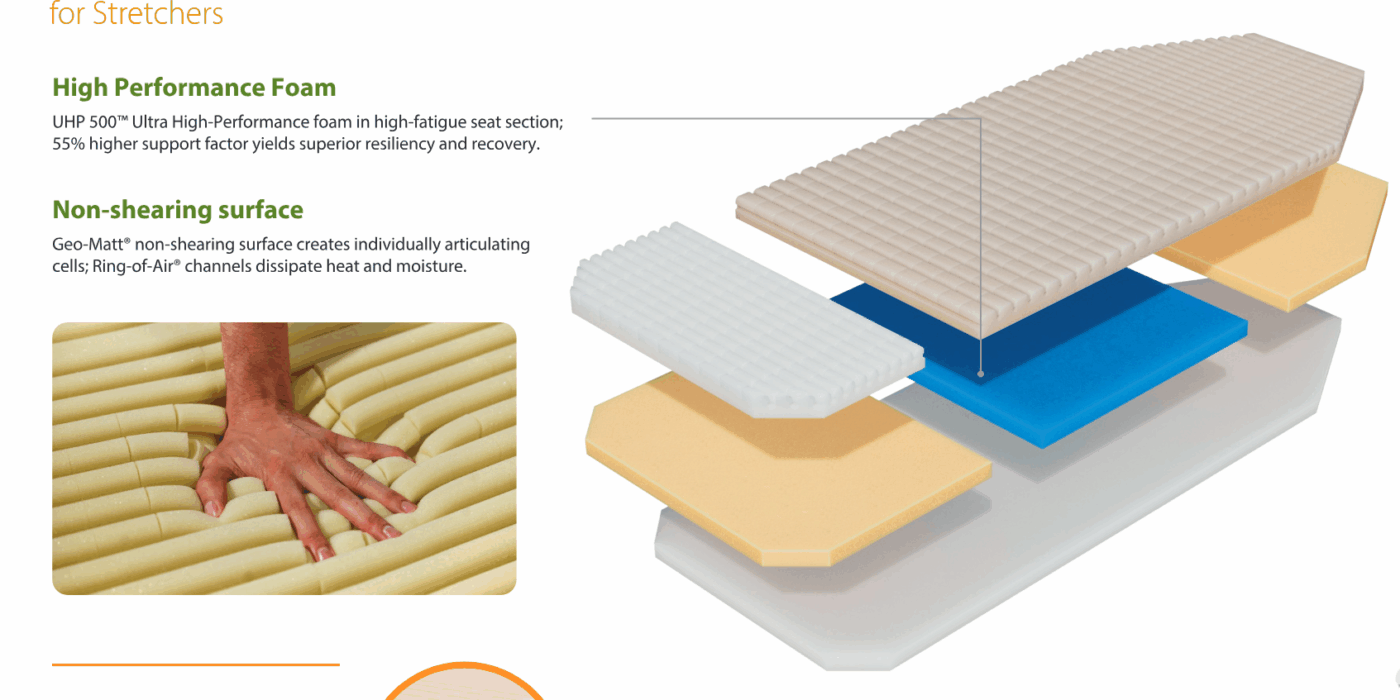
How the Geo-Mattress UltraMax Prevents Pressure Injuries During Stretcher Use
Emergency department wait times are a persistent challenge in modern healthcare, often leaving vulnerable patients on stretchers for hours before they are admitted or discharged. While much focus is rightly placed on inpatient bed surfaces, the stretcher surface is a critical, often overlooked, first line of defense against pressure injuries. Every minute a patient spends on an inadequate surface increases their risk of developing a hospital-acquired pressure injury (HAPI). Standard stretcher pads typically offer minimal protection, effectively functioning like hard surfaces over time. This creates significant risk for patients experiencing long waits or transport times. The Geo-Mattress UltraMax for Stretchers is the definitive solution to this problem, leveraging advanced pressure redistribution technology to actively protect patients from the moment they enter the facility. By ensuring safety and comfort during these vulnerable periods, healthcare professionals can align with Safe Patient Handling and Mobility (SPHM) goals and improve patient outcomes.
This article will examine the specific risks of pressure injuries on stretchers. This article will also detail how the proven Geo-Mattress UltraMax technology provides superior, therapeutic protection that standard mattresses simply cannot match.
The Unseen Danger: Pressure Injury Risk in High-Turnover Areas
The emergency department and other transport scenarios represent high-risk environments for pressure injury development, yet the equipment used often fails to meet the clinical challenge. In the fast-paced setting of an ED, the primary focus is often stabilization and triage, but skin integrity must remain a priority from the point of entry.
The Problem of “ED Boarding”
“ED boarding” the practice of holding patients in the emergency department after they have been admitted to the hospital because no inpatient beds are available, is a growing crisis. Prolonged waits on stretchers create sustained periods of pressure on vulnerable bony prominences like the sacrum, heels, and scapulae.
Standard, non-therapeutic foam pads found on many stretchers are not designed for long-term occupancy. Under the weight of a patient, these thin pads compress rapidly, “bottoming out” against the metal frame of the stretcher. This offers little to no pressure redistribution. Clinically, this is equivalent to the patient lying on a hard surface, where capillary closure can occur in minutes, leading to tissue ischemia and eventual necrosis.
Vulnerable Patient Populations
The risk is compounded by the demographics of patients who often experience the longest waits. The elderly, trauma patients, bariatric individuals, and those with compromised mobility or perfusion are at heightened risk.
For these vulnerable populations, pressure damage is not a slow process; it can begin in as little as one to two hours—well within a typical ED wait time. WOCN-certified nurses understand that once the damage is done to the deep tissue, it is difficult to reverse. Therefore, prevention must start immediately upon arrival. Relying on a standard stretcher pad for these high-risk patients is a gamble with patient safety that facilities cannot afford to take.
The Geo-Mattress UltraMax Solution: Clinically Proven Pressure Redistribution
The Geo-Mattress UltraMax is not just a mattress; it is a therapeutic surface engineered with patented technology to deliver superior pressure redistribution and shear reduction. It transforms the stretcher from a simple transport device into a therapeutic platform.
The Science of Geo-Matt Technology
At the core of the UltraMax’s performance is the distinctive, segmented “ring-of-air” design of the Geo-Matt top surface. This clinically proven design features hundreds of independent cells that work individually to conform to the patient’s body contours.
These independent cells increase the body’s surface area contact with the mattress. By spreading the patient’s weight over a larger area, the peak pressure on specific bony prominences is significantly reduced. This redistribution allows for better blood flow to tissues that would otherwise be compressed.
Furthermore, the design plays a critical role in mitigating shear forces. As patients are moved, boosted, or adjusted on the stretcher, the segmented cells move with the patient’s skin rather than against it. This reduction in friction and shear is a critical factor in preventing the tearing and deformation of tissue that leads to injury.
Delivering Therapeutic Support in Any Setting
Implementing the Geo-Mattress UltraMax is a proactive intervention that turns every stretcher into a therapeutic surface. This technology provides a consistent standard of care, ensuring patients are protected from their first point of contact.
This approach aligns seamlessly with guidelines from the National Pressure Injury Advisory Panel (NPIAP), which emphasize the use of high-specification reactive foam mattresses for at-risk individuals. By equipping transport and emergency units with the UltraMax, facilities ensure that their pressure injury prevention protocols are unbroken, regardless of where the patient is located in the hospital.
Beyond Pressure Protection: Durability and Comfort
While clinical performance is paramount, the Geo-Mattress UltraMax combines its unmatched therapeutic benefits with exceptional durability and patient comfort, making it a superior long-term investment for healthcare facilities.
Engineered for Comfort
Patient comfort is closely linked to clinical outcomes. The pressure-redistributing cells of the UltraMax do more than save skin; they enhance overall comfort by reducing the stiffness and pain associated with lying on a hard surface for extended periods.
Improved comfort leads to reduced patient agitation. Agitated patients are more likely to move in unsafe ways, risking falls or interfering with medical devices. Furthermore, in an era where patient satisfaction is a key metric, a comfortable surface can directly influence HCAHPS scores. Patients who are comfortable are less anxious and more satisfied with their care experience.
Designed for the Hospital Environment
The Geo-Mattress UltraMax is built to withstand the rigorous demands of high-traffic areas. It features a robust, fluid-proof cover that withstands rigorous cleaning protocols, protecting the core from fluid ingress and contamination. This durability ensures that the mattress maintains its therapeutic integrity over time, unlike standard pads that degrade quickly.
From a financial perspective, the UltraMax represents a smart investment. While the initial cost may be higher than a standard pad, the lower total cost of ownership—achieved through fewer replacements and the prevention of costly HAPIs—delivers significant value. It is a strategic choice that balances clinical excellence with fiscal responsibility.
Standard stretcher pads expose patients to an unacceptable risk of developing pressure injuries during ED waits and transport. This risk is entirely preventable with the right technology. As patient acuity rises and wait times fluctuate, the margin for error shrinks.
The Geo-Mattress UltraMax for Stretchers provides the most advanced pressure redistribution technology available, actively protecting vulnerable patients from the moment they arrive. It is the gold standard for pressure injury prevention in any high-turnover environment.
By upgrading to the Geo-Mattress UltraMax, you are not just replacing a mattress; you are elevating your standard of care and ensuring that safety is prioritized at every step of the patient journey.
Elevate your standard of care and eliminate stretcher-acquired pressure injuries. Contact SPH Medical today to upgrade your facility to the Geo-Mattress UltraMax and ensure every patient is protected.