
Epidural Chair prevents injuries
CategoriesPatient Handling

Patients Can Feel Safer With The Epidural Positioning Device

The Epidural Positioning Device, Positioning Patients Safety

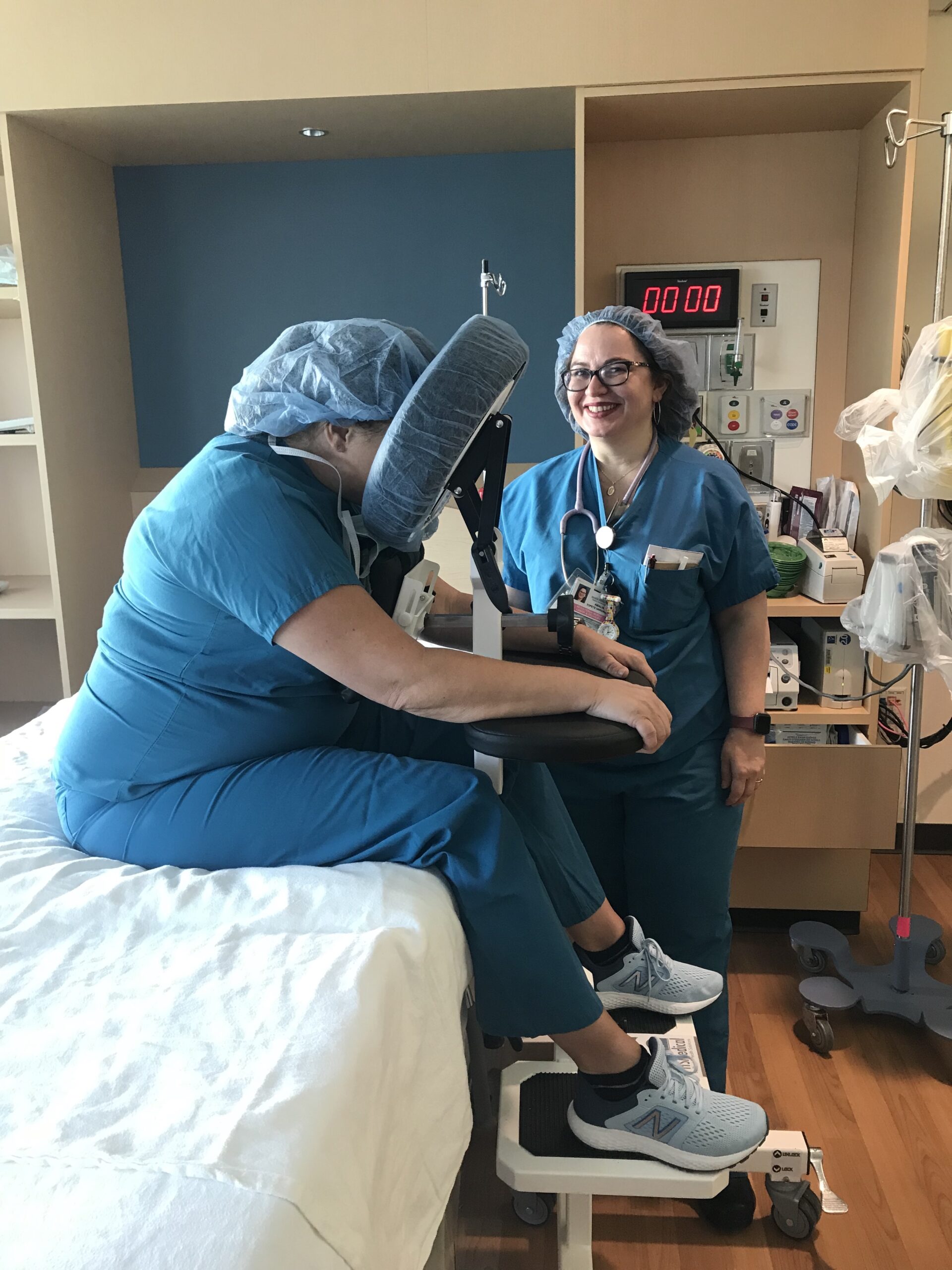
What commonly comes to mind when you hear the word epidural is that someone is giving childbirth, and they need an epidural to help with the pain. For a mother in labor, an epidural provides anesthesia that creates a range of numbness from the patients navel to her upper legs.  This enables the patient to be awake and alert during childbirth, while allowing the patient to feel pressure.  However, labor and delivery rooms are not the only recommended place for epidural procedures. Patients also receive epidural treatment in general surgery and as an outpatient treatment in pain management clinics. Doctors use epidural injections to relieve pain during and after surgery and to manage chronic pain. Although epidurals help with the pain, many patients may refuse them. The primary concern or risk with an epidural is the concern about what could happen if the anesthesiologist does not insert the needle correctly. With the development of the epidural positioning device by an anesthesiologist, patients can feel safer and comfortable when receiving an epidural. The Epidural Chair, as its commonly known, helps keep their body in the proper position and stable during the procedure.

Conditions Normally Treated with Epidurals

Doctors commonly use epidural steroid injections to relieve pain associated with the following:

  • Degenerative disc disease is changes that take place over time as the discs in your spine began to break down. It can affect the surrounding nerves and cause pain.
  • Disc herniation is a condition that occurs when a disk between two vertebrae slips out of place, causing the surrounding nerves to become irritated and create extreme pain.
  • Osteoarthritis is a type of arthritis where the protective cartilage that cushions the ends of your bones wears down over time.
  • Radiculopathy is when the pain that travels to other parts of the body radiates from the spine caused by a spinal nerve and roots disease.

What is an epidural chair?

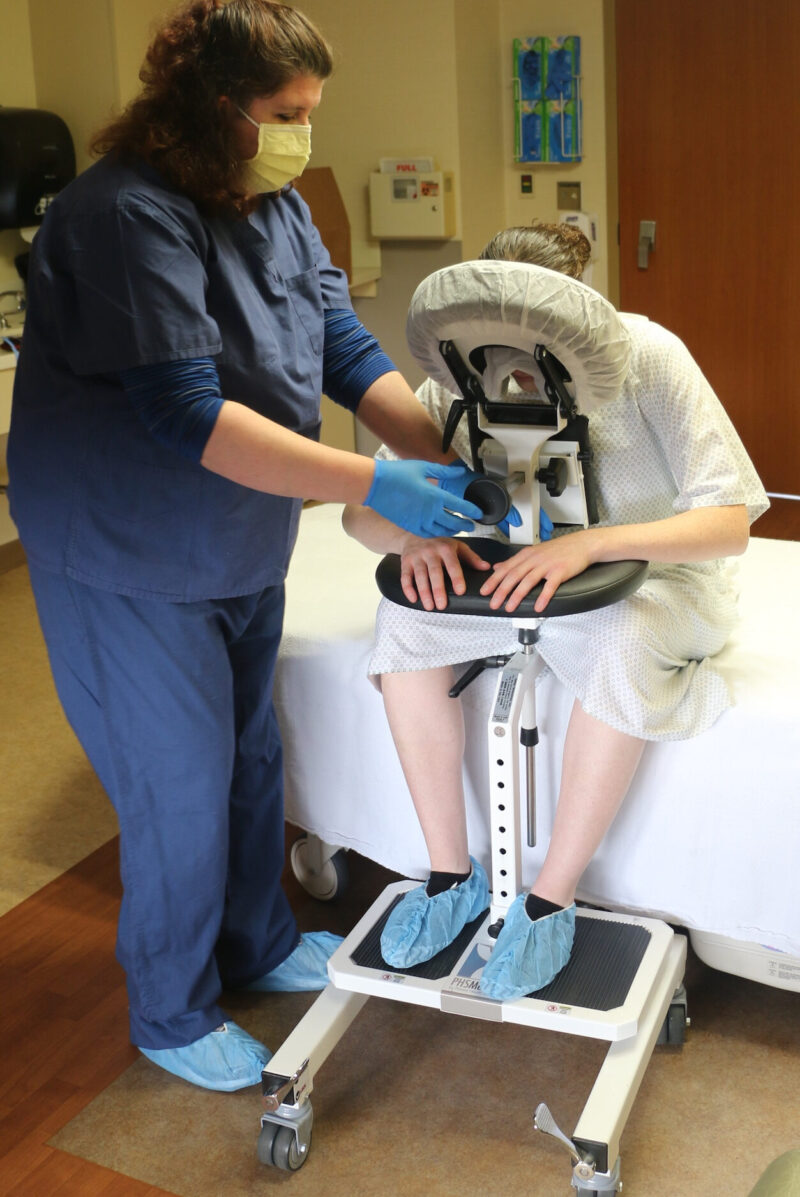
An epidural positioning device is an ergonomic stabilizing stand that can easily be adjusted to a patient’s body to provide them with enough support to keep them from moving during these common medical procedures. Anesthesiologists developed the EPD to position patients properly for correct placement and to reduce risk to caregivers. Before the availability of the epidural positioning device, caregivers had no choice but to position and hold patients manually, putting them at risk of a musculoskeletal disorder or other injuries. Patients were also at risk of falling off the bed or table! As the caregivers held the patients, the anesthesiologist would administer the epidural placement or spinal block and hope the patient did not move. If patients moved during the procedure, they were at risk of injury. Anesthesiologists were also at risk of being the subject of a lawsuit if something went wrong.

Benefits of the EPD:

  • Using an epidural positioner removes strain and injury risk to staff.
  • It allows the patient to be as comfortable as possible while preventing the invasion of their personal space than the traditional way caregivers positioned their patients.
  • The epidural positioner promotes bending of the neck, throat, and back area while keeping the person’s body stable.
  • The patient’s back remains immobile during epidural placement.
  • Reduces the risk of spreading infection throughout the facility.

With the epidural positioning device, caregivers can effectively position patients in operating rooms, labor and delivery suites, and other facilities where doctors perform epidurals and spinal block procedures.

Epidural Positioning Device and Thoracentesis

A more recent function of the EPD is that doctors are using it during thoracentesis procedures. Thoracentesis is the removal of excess fluid that has accumulated in the pleural space between a person’s lungs and the chest wall. The imaging department within the hospital typically sees these patients. A trained sonographer is tasked with positioning the patient and finding the correct intervertebral space to insert the needle. When preparing for the procedure, EPDs allow caregivers to position a patient to keep them stable and comfortable. Caregivers can adjust the machine to help support the patient’s chest, arm, head, and feet.

The epidural positioning device is suitable for operating rooms, labor and delivery suites, pain centers, or anywhere doctors perform epidurals. Because of the ability to adjust the device, it is ideal for patients of all body types and sizes.
EPD the Epidural Positioning Chair
CategoriesPatient Handling

Positioning Patients Safely with The Epidural Positioning Chair

Positioning Patients Safely With An Epidural Chair or EPD

Are you tired of straining your back and arms? Do you have frequent musculoskeletal problems from attempting to hold patients in position? It’s time to let the Epidural Positioning Device (EPD) take the load off your neck, back, arms and wrists.

If you’re a nurse, nursing assistant, anesthesia tech, Nurse Manager in Labor and Delivery, or General Surgery this product is indispensable. It provides a secure, stable and comfortable support for patients who need an Epidural, spinal block, lumbar puncture. You might even be in the hospital imaging department holding patients in a similar position during thoracentesis. Imaging departments across the country are discovering that the Epidural Chair or EPD is a comfortable and ideal positioning device to support patients and avoid risk of injury to the ultrasound techs!

What Is an Epidural Positioning Chair?

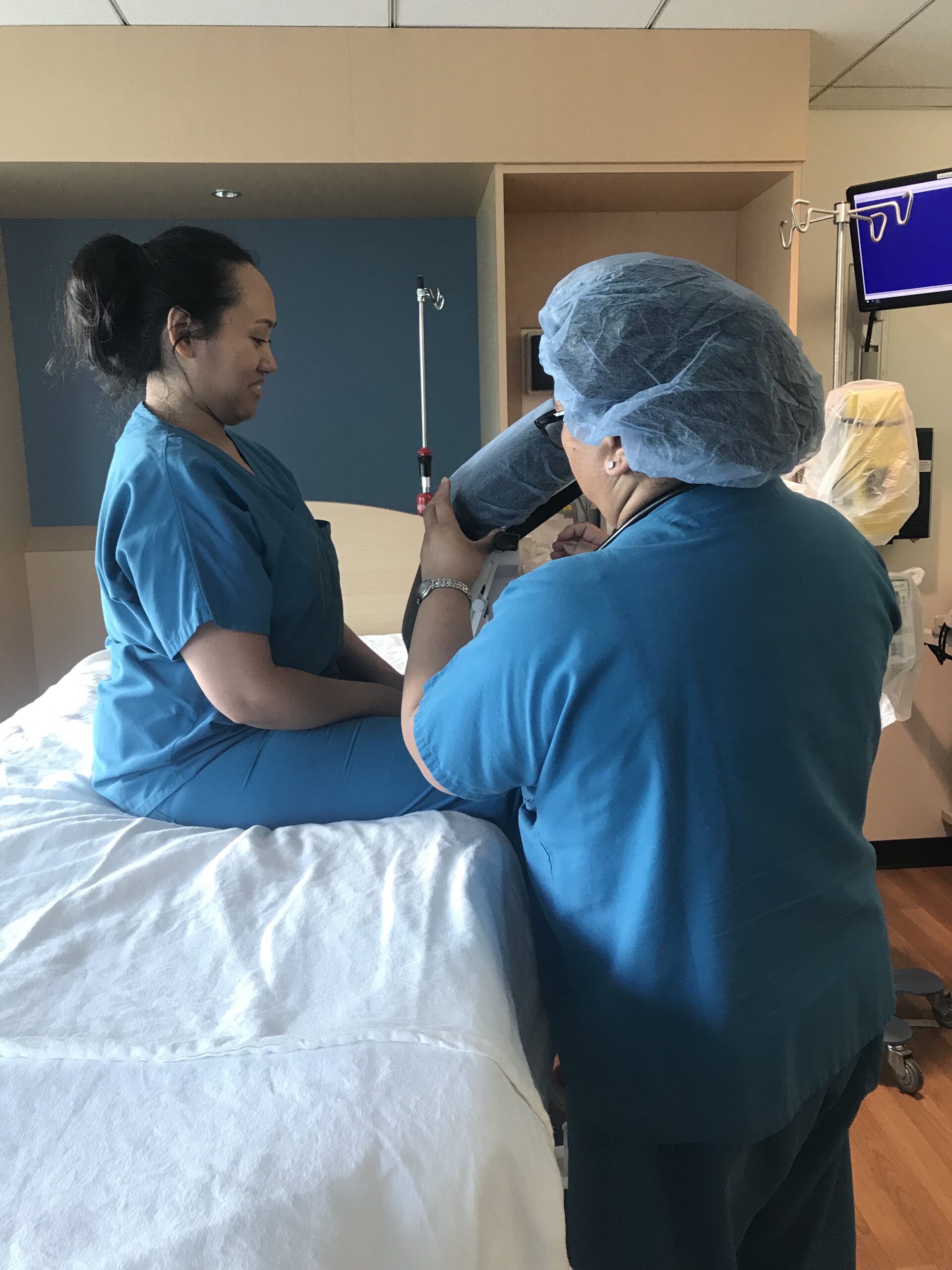
Well, many think it’s a chair but the patient is really sitting on the bed or table. the EPD provides head, chest, arm and feet support for the patient. The EPD is a stable, portable device you can use every time you need to properly position a patient at bedside when preparing for epidural or spinal block. This occurs in many clinical environments both in and out of the hospital. For example, Epidurals are administered almost once per hour on busy labor and delivery floors. With the increase of total joint replacements we’re seeing even more spinal blocks being administered in peri-operative areas. They’re using the EPD too.

The old way of manually positioning patients is dangerous. Nurses are often asked to hold the patient in position and with heavier patients this presents an even greater risk to the nurse. You have probably tried stacking pillows, asking the patient to lean forward and arch their back. Then pushing a stool over to support their feet. You might even have your patient lean over a bedside table, but more than likely, that table has wheels that don’t lock and you’ve seen a patient more than once almost slip down to the floor! Now who is going to catch that patient? There’s a better way.

Using the Epidural Positioning Chair for Epidurals, Thoracentesis, Spinal Blocks and other pain management Treatments

Nurses, health care managers and health care facilities need a better solution, and the Epidural Positioning Chair provides it. It’s the standard of care used at leading hospitals to position patients for a variety of procedures without causing dangerous falls, sprains or injuries. It gives patients a more private, dignified way to receive a spinal block or other epidural therapy. Best of all, it makes your job as a caregiver safer.

The device is fully adjustable with a six-position armrest and 180-degree adjustable face rest. It’s easy to bring this device into operating rooms, labor and delivery rooms, pain clinics, birthing rooms, imaging departments, and physical therapy clinics. Keeping the EPD disinfected and clean is easy with disposable covers for the face rest.

Benefits of the EPD

  • Keeps patients stable by ensuring proper cervical, thoracic and lumbar flexion for stable alignment.
  • Allows you to position patients in a less intrusive, more private way.
  • Avoids injuries to health care workers.
  • Is wheeled for easy portability anywhere it’s needed.
  • Is fully adjustable to fit any patient.
  • Improves Patient Satisfaction

Thoracentesis has become a regular procedure both before during and after the COVID-19 epidemic. The epidural positioning device makes it easy to manage this predictable and frequent procedure. According to Mark E Brauner, DO Thoracentesis is generally performed with the patient sitting at the edge of the bed and leaning forward with arms resting on a bedside table. Side lying positions are reserved for those patients unable to sit. Our ultrasound techs need a safe work environment as well! The EPD provides safe support for patients who may experience syncope from a vasovagal response during thoracentesis.  Leading Pulmonologists at the City of Hope Medical Center in California are using the EPD for all Thoracentesis procedures.  The Techs and the patients love it too.

Studies on pregnant women receiving an epidural found women felt more comfortable and secure when their health care providers used a positioning device. Patient satisfaction went up substantially when compared to patient satisfaction when the women received treatment without the device.

Keeping our Healthcare Workers Safe

Back Injuries, Strains and other MSD’s are a serious concern among health care workers. According to the Association of Perioperative Registered Nurses (AORN), half of all nonfatal occupational injuries experienced by perioperative nurses are musculoskeletal and more than a quarter of these are back injuries.

The average preoperative room is a high-risk area that can cause many injuries to staff:

  • Shoulder, back and lower leg sprains from lifting patients.
  • Trips and falls from cords, wires and slippery floors.
  • Muscle strains from pushing around heavy equipment.
  • Leg and back strain from hours of constant motion.
  • Neck and Back injuries from frequent and predictable lateral transfers.

The EPD addresses many of these issues. It’s no wonder the device has become standard equipment in leading hospitals including Duke University Hospital, John’s Hopkins, Mayo Clinic, Kaiser Hospitals and VA Medical Centers.

This device is a win for everyone, and it will soon become an invaluable member of your L&D, perioperative, or Imaging team.

Please contact SPH Medical for more information or to request a quote.

If you’re ready to improve patient and staff safety this device can make an immediate and positive impact. SPH Medical is a national organization focused on Nursing and frontline caregiver safety.

Add to cart