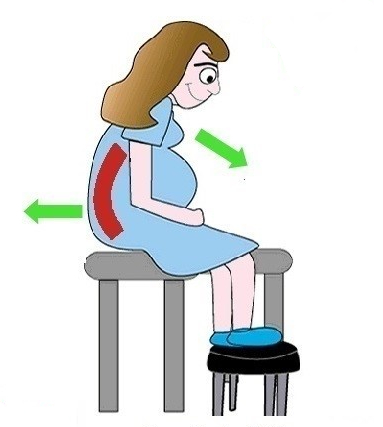
Keeping Patients Safer and Reducing Injury to Caregivers
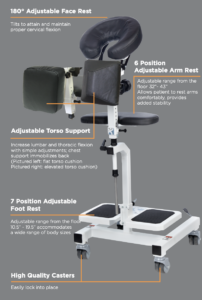
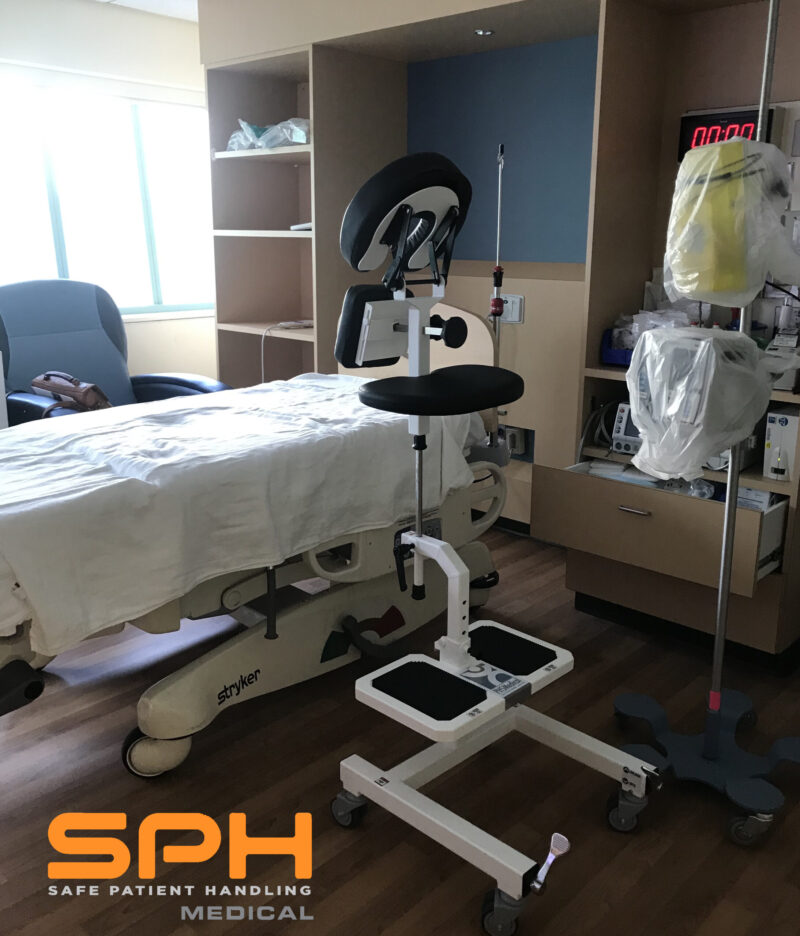
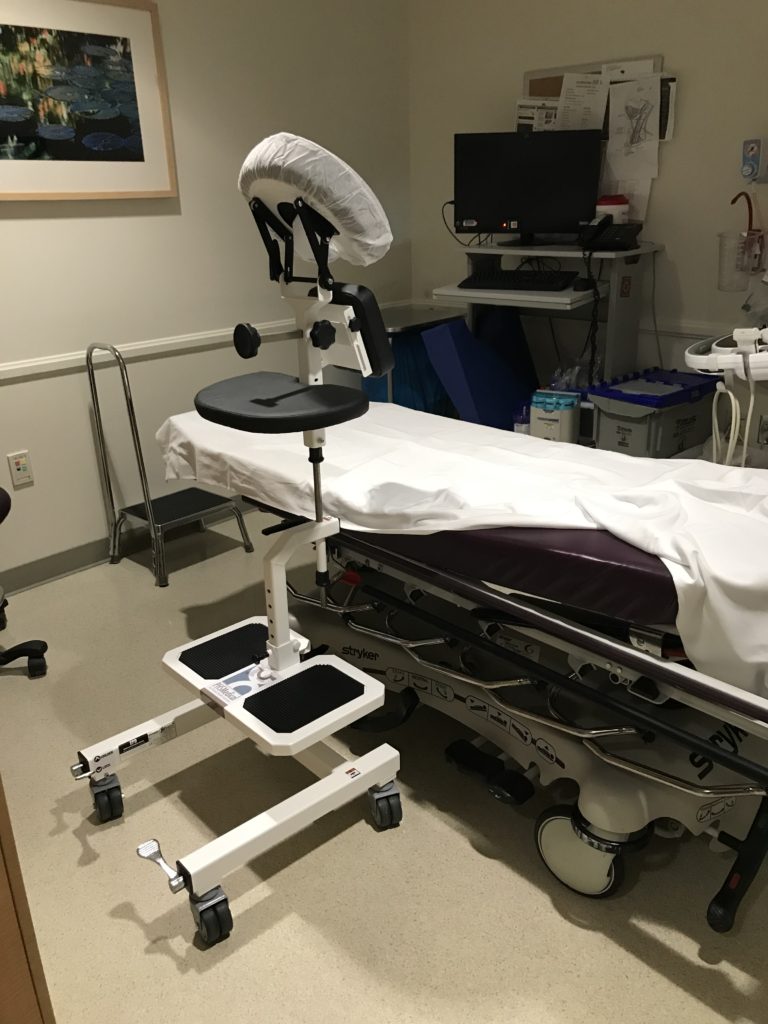
When it comes to positioning patients safely and reducing the possibility of injury to caregivers, the medical community has continually adopted new technology. The EPD is no different. Known formally as an epidural positioning device, this medical technology is successful in positioning patients safely for various procedures.
Most popularly used to position a patient for an epidural procedure, the epidural positioning device has provided many benefits for users and caregivers alike. The first and most obvious benefit is that this epidural positioner works to properly position and support a patient for a successful procedure.
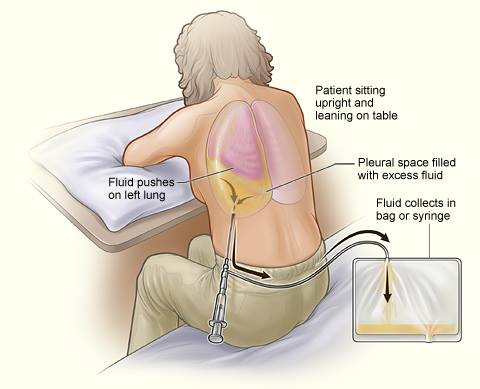
Traditionally, the caregiver had to position the patient for this procedure manually. This puts the caregiver at risk for injury or MSD. The National Institute of Health breaks down the risks of workplace injury to Nurses who work on a Labor and Delivery unit. One of the known high risk tasks for nurses identified by NIH is assisting with epidural procedures. The best way to reduce risk of injury is to either modify the task or implement engineering controls so that the risk is removed. The EPD or Epidural Positioning Chair solves these manual handling problems. In addition, manual handling allows for less accurate positioning and more risk for complications during the procedure. Once the benefits of EPD were discovered by nursing staff and patients, its use expanded to support spinal blocks, lumbar puncture, and thoracentesis procedures in the imaging or ultrasound department.
Expanded Use For General Surgery
With the success of the epidural positioner for childbirth assistance, anesthesiologists have utilized this device for different types of spinal blocks. A spinal block is, essentially, spinal anesthesia that is used to numb the spine during certain procedures. The most common procedures for a spinal block include urinary tract, genital, and lower body procedures including total knee replacements.
Since a thoracentesis procedure requires inserting a needle into the pleural space, the EPD is a much-appreciated tool. The patient positioning with this device allows for an open area between the lungs and the chest wall where the surgeon can remove excess fluid to allow the patient to breathe significantly easier.
What Are The Benefits of The Epidural Positioning Device
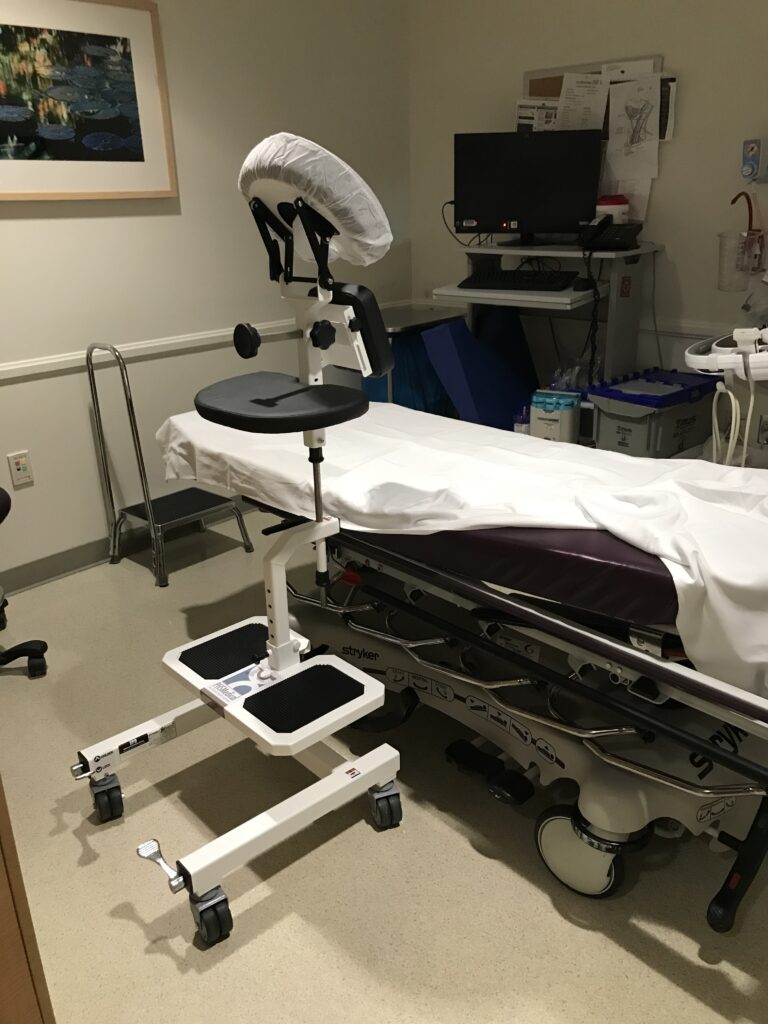
As you’ve learned, the epidural positioning device has been employed in various types of medical procedures. From starting as a better way to positioning patients safety during an epidural procedure to being employed more recently in thoracentesis procedures, it’s very clear that this medical device offers many benefits for its users.
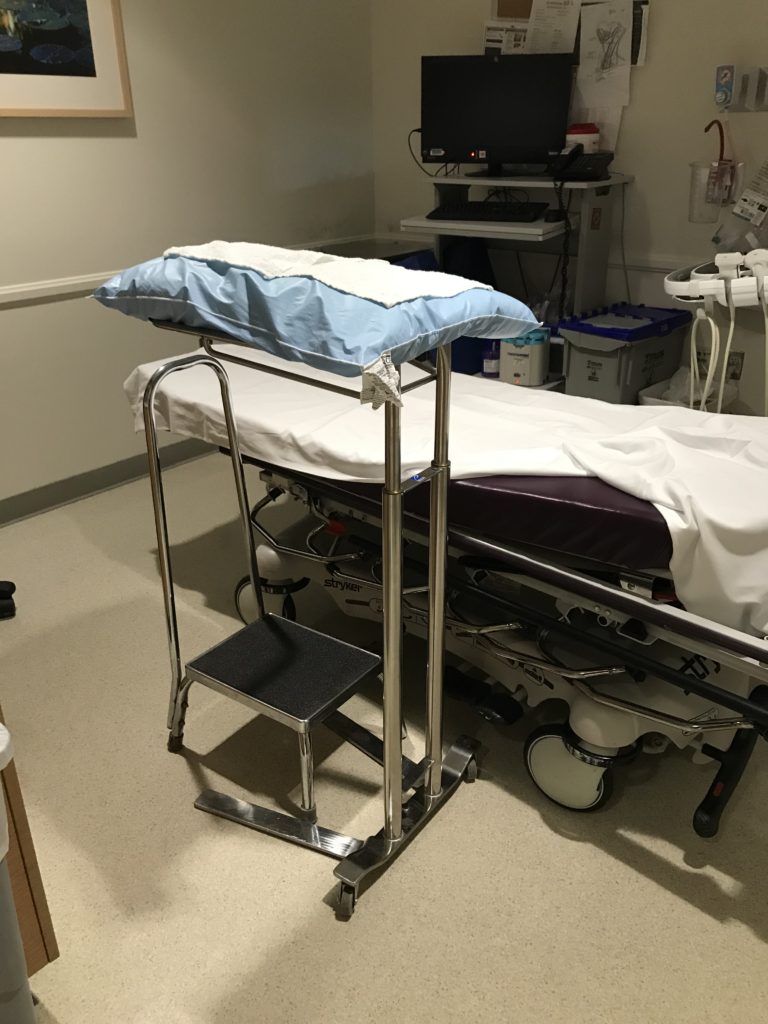
Manual epidural positioning is typically achieved with a chair and pillows. The caregiver would position the patient’s feet on a chair or stool. They would then place pillows underneath the patient’s upper body as they placed their weight on the pillows.
This isn’t a solid foundation as pillows can easily move out of position, and the height of the chair or stool is likely not ideal for all patients. The epidural positioning device comes with a solid foundation that won’t move. It can easily lock into position and offers adjustable foot platforms so that each patient can be in an ideal position for the procedure.
Eliminates Injury Risk To Caregiver
In Pre-Ops, ORs, and throughout other areas of the hospital, caregivers are manually positioning patients for epidural-like procedures. The typical scenario requires the caregiver to steadily hold a stool, table, and patient with their entire body throughout the procedure. This ensures the patient doesn’t move, resulting in patient injury.
Assisting the patient in holding the ‘mad cat’ flexed spine position puts the caregiver in an unhealthy position. This position can lead to musculoskeletal injuries for caregivers. In fact, hospital ergonomic teams have identified that these static holds, performed on a regular basis, can lead to musculoskeletal disease in caregivers.
Reduces Risk Of Complications
Given the unique, taxing nature of patient positioning during spinal blocks and epidural procedures, there is a high risk of complications. Without a reliable, ergonomic solution, like an epidural positioning device, caregivers are us
ing their own body positioning to hold the patient fast.
The patient, on the other hand, is relying on pillows to hold their positioning. As the pain sets in from the procedure, patients are very likely to move involuntarily. This further increases the risk of the procedure being compromised as the needle is not inserted into the spine’s proper place.
An epidural positioning device provides a solid positioning for patients. This positioning allows the caregiver to rely more on the device than their own body weight to hold the patient in the ideal position for the procedure. Overall, these benefits greatly reduce the risk of complications during epidurals and spinal blocks.