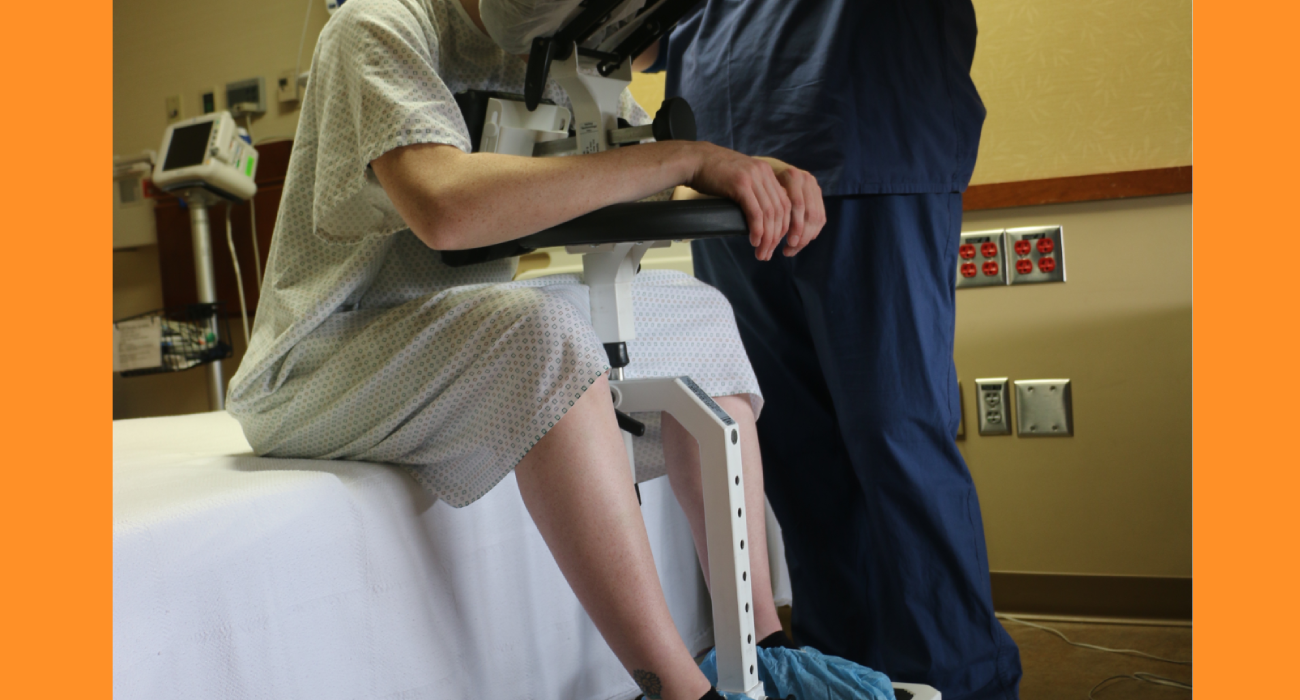
The EPD enhances safety during thoracentesis and is a game changer for this and many other procedures. Precise patient positioning is the absolute cornerstone of successful interventional procedures. Whether it is a thoracentesis, a lumbar puncture, or a spinal block, the margin for error is nonexistent.
For years, healthcare professionals have relied on makeshift solutions—stacks of pillows on rickety bedside tables or manual support from a nurse—to position patients. These outdated methods are unstable, unprofessional, and dangerous for both the patient and the medical staff.
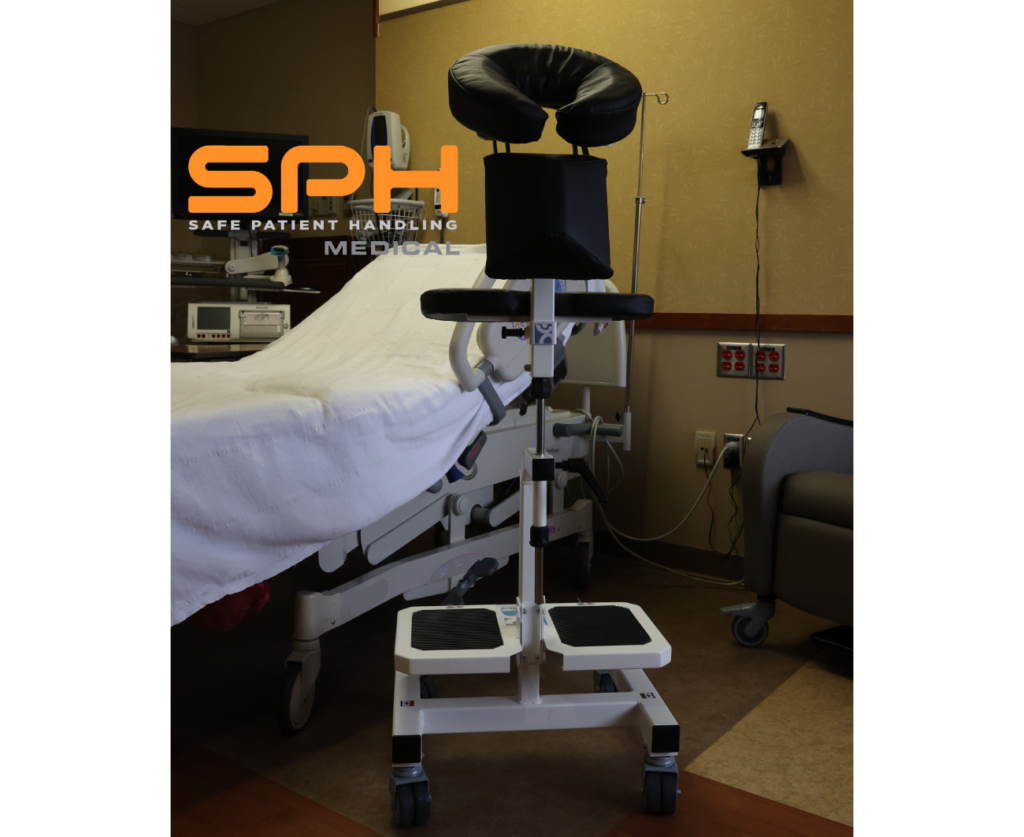
The evolution of safe patient handling demands a superior solution. The Epidural Positioning Device (EPD), widely known as the “Epidural Chair,” has emerged as the definitive standard for safely supporting patients during these critical procedures. By providing a rock-solid, mechanically stable platform, the EPD allows physicians to operate with unmatched precision while eliminating the ergonomic risks associated with manual patient support.
The Critical Role of Stability in Thoracentesis
Thoracentesis the removal of fluid or air from the pleural space—requires the patient to remain perfectly still in an upright, forward-leaning position. This posture is essential to widen the intercostal spaces, allowing the pulmonologist or interventional radiologist safe access for needle insertion.
Achieving and maintaining this position is a significant challenge, particularly for patients who are sedated, weak, or obese. In the past, this was managed by having a staff member physically hold the patient up or by leaning the patient onto a rolling bedside table piled high with pillows. Neither option offers true stability. A bedside table can roll away, and pillows compress over time, shifting the patient’s anatomy mid-procedure.
High-Volume Departments Require High-Performance Tools
While often associated with bedside care, thoracentesis is frequently performed in high-volume specialty departments where precision is paramount:
- Interventional Radiology (IR): In IR, image guidance is used to direct the needle. Any patient movement blurs imaging and risks complications. The EPD locks in place, ensuring the absolute immobility required for accurate needle placement.
- Diagnostic Imaging and Ultrasound: precise fluid localization relies on the patient maintaining a consistent posture. The EPD standardizes this positioning, reducing procedure time and improving diagnostic accuracy.
Precision for Pulmonologists and Anesthesiologists
For the physician performing the procedure, the stability of the target area is everything. Pulmonologists performing thoracentesis and anesthesiologists placing epidurals or spinal blocks rely on tactile feedback and anatomical landmarks. If the patient shifts, landmarks are lost, and the risk of a traumatic tap or pneumothorax increases.
The Epidural Positioning Device transforms the procedural environment. It provides a rigid, adjustable platform that supports the patient’s weight entirely. This mechanical support allows the patient to relax their spinal and paraspinal muscles, which naturally widens the vertebral spaces and opens the rib cage.
When the patient is mechanically stabilized, the physician can focus entirely on the procedure without worrying that the patient might slump or move unexpectedly. This stability directly translates to higher first-attempt success rates, reduced procedural time, and minimized patient discomfort.
The EPD: A Multi-Disciplinary Solution
The versatility of the EPD extends far beyond its name. While it revolutionized epidural placement in Labor and Delivery, it is now an essential tool across the surgical and medical continuum.
Engineered for Every Patient Anatomy
One of the most significant challenges in modern healthcare is the increasing prevalence of bariatric patients. Manual positioning of a bariatric patient for a spinal procedure is physically demanding and often ineffective. The EPD is engineered to accommodate patients of all sizes, with a weight capacity that supports bariatric populations safely.
The device features adjustable chest, arm, and head supports that can be tailored to the individual patient’s anatomy.
- For Thoracentesis: The chest support allows for a comfortable forward lean that opens the posterior chest wall.
- For Lumbar Punctures: The footrest and arm support encourage the necessary spinal flexion to open the lumbar vertebrae.
- For Spinal Blocks: In surgical departments, the EPD ensures rapid, safe positioning before surgery, keeping the operating room schedule on track.
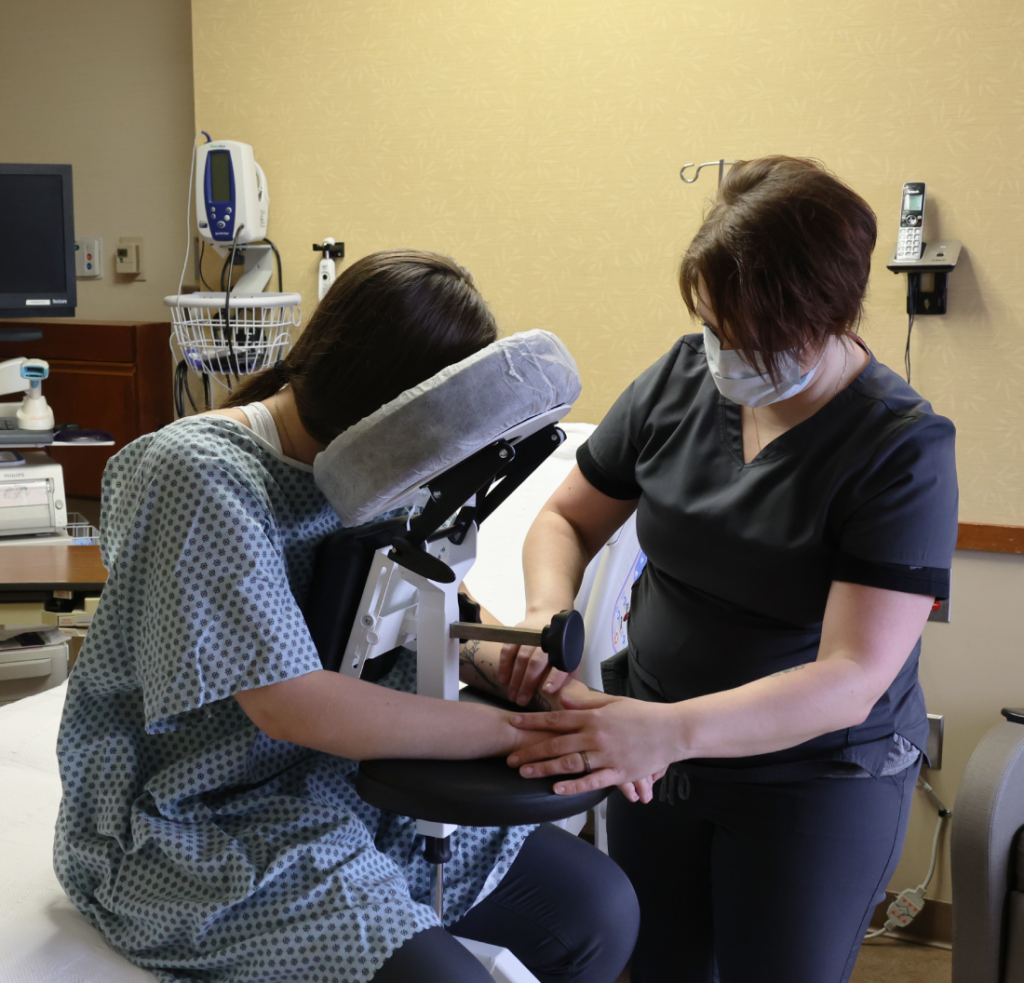
Mitigating Risk: A Crucial Component of Safe Patient Handling
The most overlooked danger in these procedures is the risk to the nursing or radiology staff. In the absence of an EPD, a nurse or medical assistant is often tasked with acting as a “human prop,” manually supporting the patient’s weight to keep them upright.
The Dangers of Static Load
Holding a sedated or heavy patient in a static position creates a massive “static load” on the staff member’s musculoskeletal system. This type of exertion is a leading cause of back and shoulder injuries among healthcare workers. It is physically impossible for a staff member to maintain a static hold with the same rigidity as a steel frame. Eventually, muscles fatigue, the hold slips, and both the staff member and patient are at risk.
Eliminating the “Rickety Table”
The practice of using an unlocked bedside table is a liability. If a patient leans too far, the table can roll, leading to a fall or a needle-stick injury. The EPD features locking casters and a solid, weighted base that does not move.
Implementing the EPD is not just a clinical upgrade; it is a necessary engineering control within a facility’s Safe Patient Handling (SPH) program. It aligns with safety standards set by the ANA and AORN, protecting staff from preventable injuries and reducing workers’ compensation claims.
Operational Efficiency and Patient Experience
Beyond safety, the EPD drives operational efficiency. Scavenging for pillows and trying to lock a broken bedside table wastes valuable time. The EPD is always ready. It can be set up in seconds, streamlining workflow in busy IR and Imaging departments.
From the patient’s perspective, the difference is palpable. Resting on a secure, purpose-built chair feels professional and safe. Clinging to a stack of pillows feels precarious. Patients who feel secure are less anxious, more cooperative, and report higher satisfaction scores.
The era of manual patient support and makeshift positioning is over. The Epidural Positioning Device is the undisputed standard of care for thoracentesis, epidurals, and spinal punctures. It provides the stability physicians need for precision, the comfort patients deserve, and the protection staff members require.
Facilities that fail to adopt this technology are accepting unnecessary liability and compromising clinical outcomes. It is time to elevate the standard of care in your Interventional Radiology, Imaging, and Surgical departments.
Do not compromise on safety. Equip your facility with the industry-leading solution for patient positioning. Request a quote from SPH Medical today to implement the Epidural Positioning Device and secure the safety of your patients and staff.