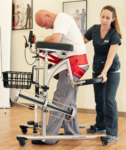
A patient needs a transfer, and needs it now. The lift is charged and waiting in the corner of the room. Everything is in place except one thing: the sling. It is somewhere in the laundry, or stored two units over, or simply missing from where it should be. The charge nurse checks the usual spots, finds nothing, and the clock keeps ticking. So two nurses do what nurses have always done under pressure. They manually lift the patient by hand, instead of using a highback disposable sling.
A lift is only as useful as the sling that pairs with it. When slings are not available at the point of care, even the best equipped Safe Patient Handling and Mobility (SPHM) program quietly fails. Patient handling equipment is one of the few interventions with strong evidence for reducing caregiver injury, yet unavailable equipment remains a documented barrier that pushes nurses right back toward manual lifting.
Here is what this article covers:
- Why manual lifting remains the greatest injury risk for nurses
- Why sling availability is the missing link in many SPHM programs
- How single patient use disposable slings stay ready and reduce infection risk
- The SPH Medical Highback Sling styles and sizes, and how to get a quote
Grounded in evidence based SPHM practice and aligned with ANA and AORN standards, the discussion starts with the problem every sling is meant to solve.
The Real Cost of Manual Patient Lifting
Manual patient lifting and transfers remain among the leading causes of disabling injury in nursing, and no amount of training or body mechanics changes that reality.
The numbers are sobering. Hospital workers sustained 46,000 work related back injuries in 2001, and roughly 38 percent of those injuries were tied directly to patient handling. Patients lack handles, distribute their weight unevenly, and can move without warning, so a single manual lift loads the spine and shoulders well beyond safe thresholds. OHSU Biodynamics laboratory testing confirms that manual handling generates far higher spinal loads than assistive devices, and decades of research show that body mechanics training alone does not prevent these injuries.
Picture a charge nurse covering a short staffed shift. A patient needs to move, the sling is not on hand, and a quick manual boost seems like the practical choice. What that nurse cannot see is the load traveling through each caregiver’s spine, a load that exceeds safe limits with every repetition.
Manual lifting puts a great deal at risk:
- Strains, sprains, and cumulative back injuries
- Lost workdays and workers compensation claims
- Experienced staff who leave the profession after injury
The evidence is settled. Lifting by hand is the risk, and a ready sling is the answer. The trouble is that availability, not ownership, decides whether that answer is ever used.
Why Sling Availability Is the Missing Link
A lift a nurse cannot pair with a sling is a lift that goes unused. Inaccessible slings are one of the most overlooked failure points in safe patient handling, and they are precisely where good programs fall short.
SPHM literature identifies unavailable equipment, inconvenient storage, and slow cleaning turnaround as direct barriers to consistent lift use. Reusable slings create a supply gap that is easy to underestimate. A sling sitting in the laundry, stranded on another unit, or awaiting return is a sling that is not at the bedside when the transfer is needed. Under time pressure, nurses default to the fastest available option, and when that option is their own body, injury follows.
Consider a unit with three ceiling lifts and a rotating shortage of clean slings. The lifts are excellent. The program is well intentioned. Yet nurses reposition and transfer manually, day after day, simply because the correct sling is never quite where it needs to be.
Common availability failures look like this:
- Slings circulating through laundry instead of sitting at the bedside
- Slings borrowed by, or stranded on, other units
- Uncertainty about which sling style fits the patient
Availability and accessibility, not just ownership, determine whether a sling protects your staff. This is exactly the gap single patient use disposable slings are designed to close.
How Single Patient Use Disposable Slings Stay Ready
Single patient use disposable slings stay at the bedside for the duration of a patient’s stay, so the correct sling is always within reach the moment a lift is needed.
That single change solves several problems at once. Because the sling is dedicated to one patient and remains in the room, there is no waiting for laundering, no searching other units, and no delay that tempts a manual lift.
The collect, launder, track, and return cycle disappears entirely, freeing linen and labor resources while guaranteeing a ready sling on every shift. The infection control benefit is just as meaningful. A reusable sling that travels from patient to patient can carry pathogens with it. A single patient use sling stays with one patient and is discarded at discharge, closing that transmission pathway and supporting your healthcare associated infection reduction goals.
Dedicated, bedside availability delivers several advantages:
- Immediate readiness at the point of care, on every shift
- A clear, safe default that keeps nurses off manual lifts
- Support for HAI reduction through dedicated, single patient use
- Simplified workflow that removes the laundry bottleneck
Imagine an infection preventionist and a charge nurse reviewing practice together. They find that dedicating a disposable sling to each patient removes a shared surface from the unit and, at the same time, guarantees the sling is always available for safe transfers. Disposable slings turn availability from a daily uncertainty into a standing guarantee, which is exactly what an effective SPHM program requires.
With readiness solved, the next question is fit, and this is where the Highback Sling stands out.
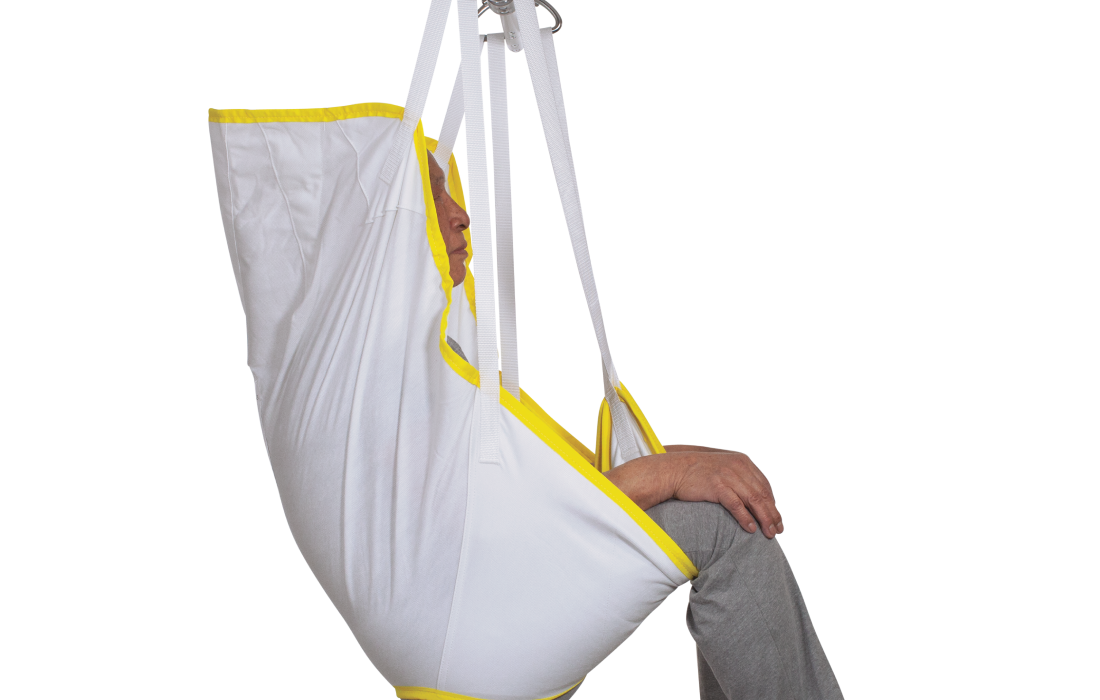
The SPH Medical Highback Sling: Styles and Sizes for Every Patient
The SPH Medical single patient use Highback Sling is available in several styles and sizes, so every patient can be matched to a sling suited to their body and their transfer needs.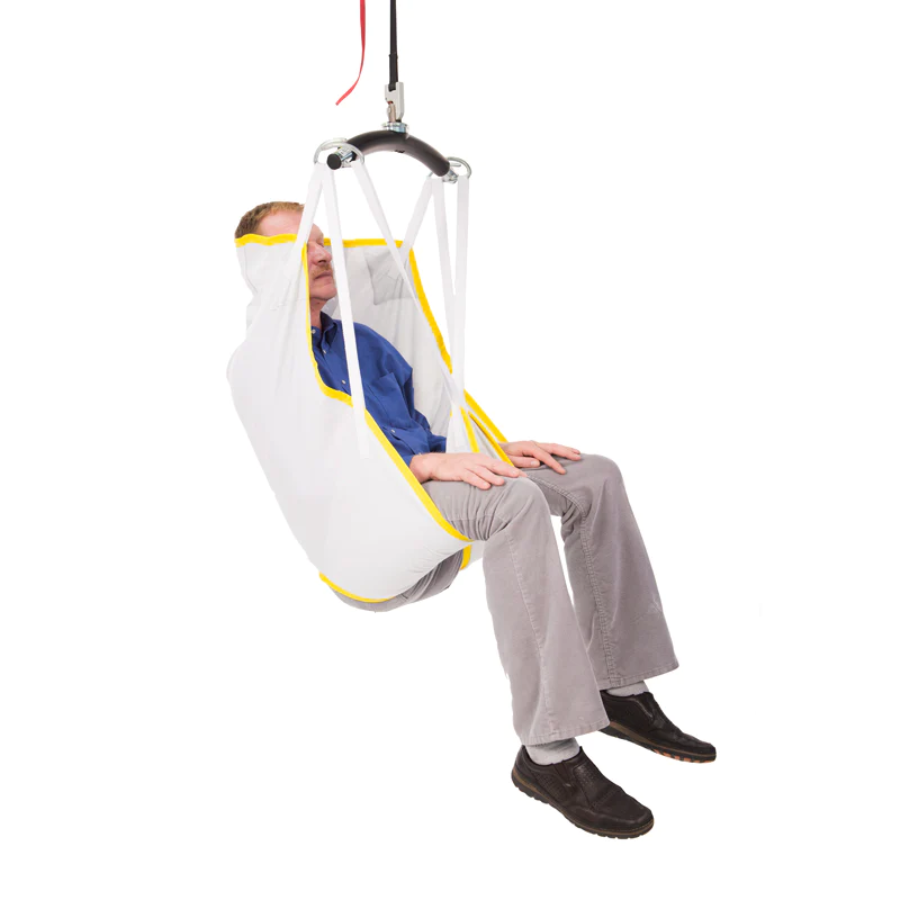
Matching the sling to the patient and the task is a safety decision, not a routine detail. The right choice affects comfort, dignity, and secure support during every lift. A range of styles and sizes means charge nurses can dedicate the correct sling to each patient at admission, rather than improvising with whatever happens to fit. Proper fit supports skin integrity and gives both patient and caregiver a confident, secure transfer.
When matching a Highback Sling to a patient, consider:
- Correct size for the patient’s body and weight
- Style suited to the patient’s support and transfer needs
- Compatibility with the unit’s mobile or overhead lift
- Condition monitored throughout the stay
With the right Highback Sling assigned to each patient and kept at the bedside, the safe choice becomes the easy choice. That everyday convenience is what ultimately protects your nurses’ careers.
How Accessible Slings Protect Your Nurses
When the right sling is always within reach, nurses stop lifting by hand. The strains, sprains, and career ending back injuries that follow manual handling drop right along with them.
Every avoided manual lift is a load the spine never carries. Cumulative injury is exactly what builds from repeated manual handling, so removing those repetitions over weeks, months, and years genuinely changes outcomes for your workforce. Ready slings reduce workers compensation claims, lower lost workdays, and help retain the experienced nurses a facility cannot afford to lose to preventable injury. Consistent, available equipment also supports ANA and AORN SPHM standards and demonstrates clear due diligence in protecting caregivers.
The benefits show up in measurable ways:
- Fewer staff injuries and lower injury severity
- Reduced workers compensation costs and lost time
- Stronger retention of experienced nurses
- A safer, more compliant SPHM program
Accessible slings are not a supply detail to manage. They are a direct investment in the health and longevity of your nursing workforce.
Keep Safe Transfers Always Within Reach
Manual lifting remains a top injury risk for nurses, and slings prevent it only when they are available and accessible. Reusable slings too often leave a supply gap that pushes staff back toward the very lifting that harms them. Single patient use disposable slings solve that problem by staying ready at the bedside, removing the laundry burden, and reducing cross contamination. The SPH Medical Highback Sling delivers the styles and sizes to fit every patient, so the right sling is always on hand when it matters.
A lift is only as useful as the sling that is ready when the moment comes. Audit sling availability across your units, identify where shortages are quietly forcing staff into manual lifts, and dedicate a Highback Sling to each patient at admission. Then make availability a guarantee rather than a hope.
Contact SPH Medical for a quote and keep safe transfers always within reach.
Frequently Asked Questions
What is a single patient use disposable sling? It is a sling dedicated to one patient for the duration of their hospital stay, then discarded at discharge. Because it stays in the patient’s room, it is always available the moment a lift is needed. This eliminates laundering delays and removes a shared surface that could carry pathogens between patients.
How do disposable slings reduce cross contamination risk? A reusable sling moves from patient to patient and can transport pathogens along the way.
A single patient use sling stays with one patient and is never shared, which closes that transmission pathway. This dedicated approach supports your infection prevention efforts and healthcare associated infection reduction goals.
What styles and sizes does the SPH Medical Highback Sling come in? The Highback Sling is available in several styles and sizes to meet diverse patient needs. This range allows charge nurses to match each patient to a sling suited to their body, weight, and transfer requirements. Proper fit supports comfort, dignity, skin integrity, and a secure transfer for both patient and caregiver.
How do I get a quote for Highback Slings? Contact SPH Medical directly to request a quote. The team can help you select the right styles and sizes for your patient population and confirm compatibility with your existing mobile and overhead lifts.